
 Let’s Keep It Real
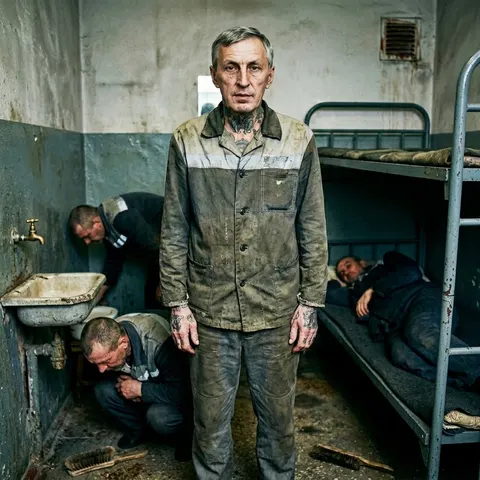
The old linoleum on the cell floor had been worn nearly through. Cracks ran everywhere, and dark stains had soaked in for good. Through his thin cloth slippers, Boris could feel the grave-cold concrete underneath.
But to understand how Boris Timofeyevich Kholodov ended up in this cell beside the toilet bucket, you have to go back to the beginning. The road that brought him here—under the mocking eyes of younger criminals—had been long and rough. Boris was born in a big industrial city in the spring of 1953, on a major national holiday.
His mother used to joke that he came into the world under fireworks, and that it had to mean something. She never said exactly what. His father worked as a mechanic at a factory, and his mother sewed in a garment plant.
The family lived in a cramped barracks-style building on the edge of town, where three families shared one tiny kitchen. Money was always short. Winters were bitter in those rooms, and summers felt airless and hot.
The only water pump stood out in the yard. The bathroom facilities were out there too. Boris grew up a quiet boy.
He didn’t start fights, but he didn’t make himself an easy target either. In school he was average, but he loved to read. He checked books out from the library and carried them home in stacks.
Adventure stories, detective novels—anything he could get his hands on. His father used to grumble that books wouldn’t put food on the table and told him he ought to learn a trade. Boris would nod, then pick up another book.
When he turned fourteen, everything changed. His father badly broke his leg at the factory and never really worked again. The family’s money problems turned serious.
Boris had to take a job as a loader at the local produce market. He hauled sacks and crates all day until his back ached every night. For all that work, he made next to nothing.
That was where he met Vitka Kosoy. The boy was three years older and ran with local street criminals. He dressed better than everybody else, smoked expensive cigarettes, and always had cash.
One day Vitka offered Boris what he called a better way to earn. “Why keep breaking your back like a mule?” he said, squinting with his good eye. “Come with me on a job.”
He promised Boris could make more in one night than in a month of hauling produce. Boris thought it over and agreed. It was his first theft: a grocery store in an industrial neighborhood.
Vitka distracted the clerk with easy talk. Boris slipped a whole case of canned meat out the back door. His heart pounded so hard he thought the sound alone would give him away.
But it went smoothly. They split the money down the middle. Boris brought home enough food for a full week.
His mother didn’t ask where it came from. His father gave him a long, hard look but kept quiet too. After that came more jobs: warehouses, kiosks, apartments.
Boris learned to open locks, force doors, and move fast without making noise. Vitka praised him in front of the others. Said the kid had nerve and brains.
By seventeen, Boris was already one of their own in the local criminal crowd. People knew him. Respected him, in that world. He had money in his pocket, and his clothes looked decent for once.
Share how the story made you feel
0Comments appear after a quick automatic check. Please no links, ads or personal data.
Next to your name we show your country, determined from your IP address; the address itself is never shown, and only a hashed fingerprint of it is kept to stop spam.