Alena said yes, they had gone to the county clinic, where they were told to wait and see. Ludmila repeated the phrase “wait and see” in the tone people use when they don’t believe a word of it. What followed was a conversation they had already had in one form or another for months.
Ludmila spoke in hints, never accusing anyone outright, because that would have been too simple. She said a mother always knows when something is off, and if it were her, she would have noticed sooner, because in her day children were raised differently. Alena’s answers grew shorter and shorter until she stopped responding at all and just washed dishes until Ludmila ran out of steam.
The jar of preserves sat unopened on the table. That evening her mother-in-law stayed to “help around the house,” as she put it. Arsen was already asleep, and Mike came home from work smelling like motor oil and fatigue.
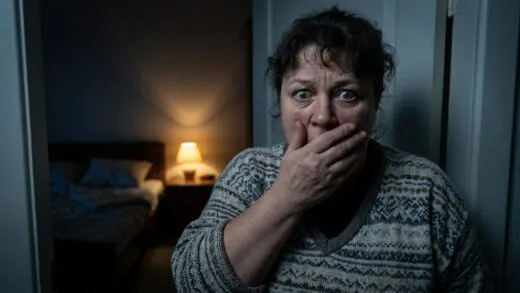
Alena heard the kettle start up in the kitchen and heard Ludmila saying something to her son in a low voice. She didn’t get up to join them. She lay in bed staring at the ceiling, listening to the tones more than the words: her mother-in-law quiet and persistent, her husband answering in short phrases.
Then Mike came into the room and awkwardly said his mother knew an old healer, Vera Andreevna, someone everybody in Rumynovka knew. Alena flatly refused. Mike quickly agreed with her and stepped back out. A few minutes later she heard his voice again, only now it had shifted into that conciliatory tone he used when he knew arguing was pointless.
He was explaining to his mother that this was the twenty-first century and there were real hospitals. Ludmila said nothing. Her silence was always the worst part.
Alena got out of bed and quietly went into the nursery. Arsen was asleep on his side with his knees tucked up, one arm stretched along his body and the other gripping the edge of the blanket. She went over, bent down, and ran her fingers along his cheek—warm, soft, smelling faintly of milk and baby sleep.
A little hand cream still glistened on the back of her hand from earlier that evening, though she had forgotten all about it. Her fingertip left a faint damp trace on Arsen’s cheek, and it disappeared into the delicate skin almost at once. Alena didn’t notice. She was only thinking that tomorrow she would call the city hospital herself, without involving Ludmila.
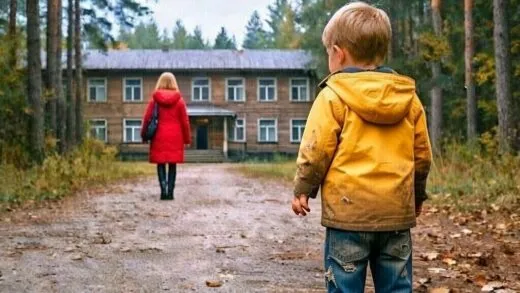
Outside, the rooster from the Zaitsevs’ place started up again, as if determined to make sure no one in town relaxed too soon. Vera Andreevna’s house stood where Rumynovka seemed to think better of continuing. Beyond it was an open field, then a strip of birch trees, and after that, miles of farmland.
The garden ran along the fence so far that the end of it disappeared around the bend, and bunches of drying herbs hung under the porch roof. They were gray, brown, straw-yellow, like old questions no one had answered. Ludmila walked in front with confidence, the way people do when they know exactly where they’re going and why.
Arsen sat in her arms, staring blankly at the birches. Mike stayed half a step behind, in his usual position whenever his mother and wife were at odds—close enough to step in, far enough not to have to yet.
Alena trailed behind carrying Arsen’s knit cap, which he had already pulled off. She looked at the old house the way someone looks at a menu in an unfamiliar roadside diner, not expecting much. To no one in particular, she said dryly that she just loved the idea of taking her child to a folk healer in the twenty-first century.
Without turning around, Ludmila told her to keep walking. Mike shot his wife a warning look. Alena hooked the child’s cap over one finger and spun it nervously as they climbed the path to the tall porch…