An hour later, three specialists from a covert unit called “Mirror” were sitting in the general’s office. They were experts in psychological operations and unconventional methods, led by Colonel Igor Serov, whose codename was “The Artist.” He had earned the nickname, the story says, because he treated punishment like a carefully designed performance—one meant to send a message.
Serov believed punishment should mirror the crime and carry a certain grim symmetry. The courier who arrived brought a slim file containing only four recent photographs and short dossiers without full names. The first target was Viktor Astakhov, nicknamed “Major”—a twenty-two-year-old student at the diplomatic academy and the son of a deputy minister.
He liked racing his father’s expensive car and making money in illegal currency deals on the black market. He was arrogant, cruel toward weaker people, and cowardly under real pressure. His deepest fear, according to the file, was losing status and control over his own life.
The second was twenty-three-year-old Pavel Gromov, nicknamed “The Athlete,” the son of an army general and a champion boxer. He had repeatedly escaped consequences for savage beatings thanks to his father’s connections. More than anything, he feared physical helplessness.
The third was twenty-one-year-old university philosophy student Alexei Ordyntsev, son of a famous academician and winner of the state’s highest honors. This smooth-talking intellectual was said to be the group’s in-house theorist, fond of Nietzsche and of talking about the right of the strong. His greatest fear was losing his mind—the very thing he considered proof of his superiority.
Last on the list was the driver, Sergei Sidorov—the son of an ordinary cabdriver who had attached himself to this privileged crowd as their chauffeur and errand boy. For a taste of luxury and acceptance, he was willing to do just about anything. What he feared most was ending up poor, invisible, and stuck at the bottom.
Handing the file to The Artist, the general reportedly stressed the importance of the order. The point was not simply to kill these men but to make an example of them—to make sure others like them would think twice before acting as if they owned the world. Each one, he said, should face not just death but his own deepest fear, and understand the bill being presented before the end.
The Artist gave a quiet nod. His usually sleepy eyes, the legend says, sharpened with cold professional focus. In his mind, he was already sketching out the performance, beginning with the weakest and most frightened of the four—Major. His full confession would serve as the opening act, and after that the group would begin, one by one, to turn out the lights.
Once the Mirror team got to work, the best technical specialists were assigned to support them. Within hours, the targets’ apartments and cars were supposedly wired for sound, and their phones placed under full surveillance. The hidden machinery of the state began to move, setting the stage for the first act of revenge.
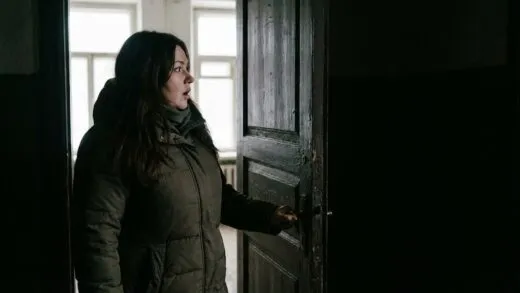
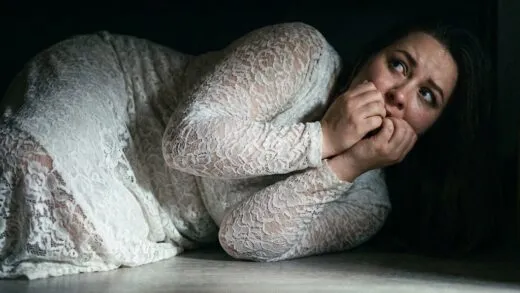
The performance began the next day, when Viktor Astakhov woke in his upscale apartment on a central avenue and found himself cut off. The phone was dead. The front door was bolted from the inside with a heavy latch that had not been there the night before. Looking out the window, he saw a strangely empty, silent street and realized with growing panic that his home had become a trap.
He rushed from room to room until, suddenly, the phone rang. Grabbing it, he heard a flat mechanical voice address him by name and say they knew everything about what had happened in the park. Then the voice added that they were already on their way. The line went dead.
Cold with fear, he ran to the window and saw three motionless figures in gray raincoats standing across the street, staring up at his windows. Then the apartment lights went out. In the ringing dark came the slow sound of a key turning in the front door—the same door he himself had locked.
When it opened without a sound, a silhouette appeared in the doorway, face hidden in shadow. The man stepped inside, locked the door behind him, and carried only a small hard-sided briefcase. Backing into a corner, the terrified young man asked in a thin voice who he was and what he wanted…