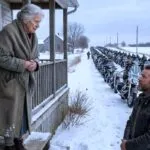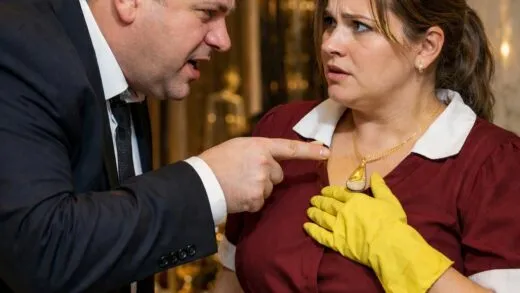

Paul remembered sitting in the courtroom—a small, stuffy room with dusty blinds—watching the judge read the decision without once looking up from her papers. Medical evaluations, testimony from his daughter-in-law, notes from his doctor, a character reference from a neighbor. It was all perfectly arranged, like a pristine accounting report where every number was verified and every conclusion justified. There was nothing to argue against.
“Don’t you worry, Dad,” Susan said after the hearing, taking his arm to lead him to the car with such tenderness that a passerby would have been touched. “This is for your own good. Now I can take proper care of you.”
He remained silent. Forty years in his profession had taught him one crucial lesson: when your opponent thinks they’ve won, when they relax and stop paying attention to the details, that’s when they get careless. And carelessness always leaves a trail. The years that followed were a methodical, systematic plundering. Not crude or obvious, but quiet, done on paper, hidden behind a mountain of receipts and checks. Money flowed out of his accounts by the thousands. First for medical treatments and necessary procedures, then for an urgent roof repair and a new furnace, and then just… because. Because a conservator has the right to manage their ward’s funds as they see fit.
Paul kept his own records in an old ledger he hid under his mattress, pushed deep against the wall: dates, amounts, check numbers, and the discrepancies between what Susan said the money was for and where it actually went. He couldn’t stop the theft—the court order had taken that power from him—but he could document it, turning it into a body of evidence, an indictment that someone, someday, would read. Meanwhile, Arthur started an LLC, “Riverbend Properties,” with a grand name and a vague business plan. He leased an office downtown and, on his rare visits, boasted of successful investments and promising ventures.
Paul recognized his own money in those “investments”: the transfer amounts, the dates, how perfectly they coincided with the withdrawals from his accounts. Margaret visited rarely. Her mother always had a reason why it wasn’t a good time: Grandpa needs his rest, the doctors insist, he’s had a hard day, it’s better not to disturb him, he won’t even recognize you, you’ll just get upset. But when his granddaughter did manage to break through those barriers, arriving unannounced, Paul saw in her eyes the same confusion he himself felt.
“Something’s not right here, something doesn’t add up. A penny’s out of place. Grandpa, how are you?” she’d ask, sitting beside him on the sofa, studying his face.
And he could feel her searching for the signs of dementia her mother always talked about, searching and not finding them.
“Maggie,” he’d answer, his voice a whisper, listening for footsteps in the next room.
“Remember what I taught you: if a penny is missing today, a dollar will be missing tomorrow,” she’d finish for him.
“I remember, Grandpa. I remember everything.”
“Remember that. And remember my book. Nimzowitsch, ‘My System’.”
In 2010, while Susan was in Cleveland filing another round of paperwork to expand her control over his assets, Paul convinced his neighbor Steve, an old fishing buddy he could still trust, to drive him to Newport—a county seat forty miles away, a place his daughter-in-law would never think to look. There, in a tiny bank branch with a single teller window, he opened a new account and transferred millions into it. Everything he had managed to save before he lost control. Everything that was left of forty years of work and his parents’ legacy.
He hid the passbook inside a hollowed-out copy of “My System” by Aron Nimzowitsch—the chess manual they had discussed hundreds of times, analyzing complex positions on the porch during those summer evenings.
“In the endgame, victory belongs to the one who can wait,” he said to the bookshelves, closing the secret compartment and returning the book to its place between Capablanca and Alekhine.
He waited for fourteen years. And his patience paid off—not in his lifetime, but it paid off. The funeral was on a Thursday. Brief, efficient, organized by Susan with the same practical skill she applied to everything else. An October rain had turned the country roads into a muddy soup. The priest seemed eager to finish, glancing at his watch.
Arthur was forty minutes late, blaming traffic that didn’t exist on a weekday. After the small reception, when the neighbors had left with their Tupperware containers of leftovers and their memories of the deceased, Margaret slipped into her grandfather’s study—a small room lined with bookshelves, smelling of old paper. She remembered his words from two weeks ago, his voice weak but his handshake surprisingly firm: “The book. The chess book. Nimzowitsch. Only you, Maggie. I only trust you.”
“My System” was on the third shelf, between Capablanca and Alekhine, dusty but not forgotten. The book felt too heavy for its size. Inside, a neat rectangle had been cut from the pages, and nestled within was a worn passbook with an old cardboard cover. Margaret didn’t even have time to open it. A floorboard creaked behind her. Her mother stood in the doorway, her expression shifting as fast as the weather before a storm: surprise, recognition, fear, and finally, a cold, calculating anger.
“What are you doing in here?”
Susan crossed the room in three quick strides, snatched the book from her daughter’s hands with a sharp, predatory motion, and tossed it into a trash can by the kitchen door.
“That’s just old junk. Should have been buried with him. Stop rummaging through his things, we’re selling the house anyway.”
Margaret stood in the middle of the kitchen, staring at the trash can where the passbook had landed, and felt something shift inside her. It was like the moment in chess when an unexpected move by your opponent changes the entire board.
Her mother was already back in the living room, where Arthur was scrolling through real estate listings on his phone. Their voices were low and businesslike. Two people discussing a transaction, not a family that had just buried its patriarch…