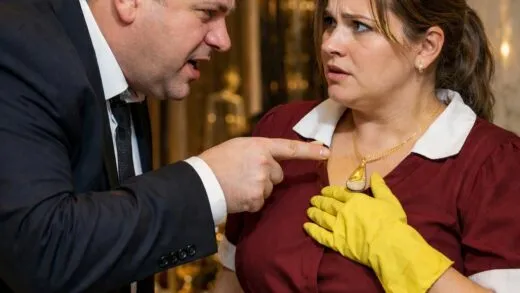
Dr. Edwards sat in his chair.
His face was dark, but he was trying hard to stay composed. He opened the bottom drawer of his desk, took out a squat bottle of expensive French cognac, poured himself two fingers, and drank it slowly. “Calm down, Margaret,” he said in a smooth, soothing voice, dabbing his lips with a napkin.
“The old man has lost his grip from grief. He’s in denial. Families do that when a patient is this far gone.”
“He brought in some kind of folk healer.” “Lost his grip?” Margaret paced the room, her heels sinking into the rug. “I don’t care about his emotional state.”
“I’m on a deadline. You promised this would be resolved by the end of the month. You said her body wouldn’t tolerate another dose.”
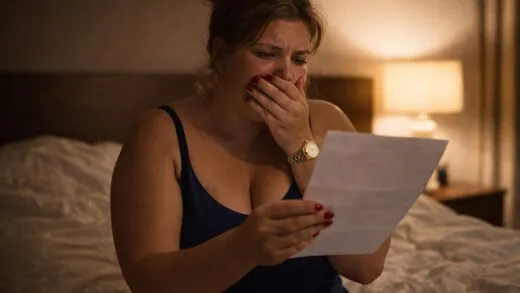
She stopped and looked at him with open hatred. Her perfect life was coming apart. Her taste for luxury, expensive trips, and casino weekends had buried her in debt.
She owed money to dangerous people, and she had put up everything she owned—including her upscale condo—as collateral. Her only leverage with those creditors was a medical statement showing her niece in critical condition and paperwork suggesting she might control the inheritance. If Sophie died, Michael, broken at last, would hand management of the family trust to her, the only remaining adult relative.
“If he leaves that trust to Sophie instead of me, I’m finished,” Margaret hissed, leaning toward the doctor. “Those people won’t wait. Do you understand? We’re in the same boat. Get that old witch out of the room.”
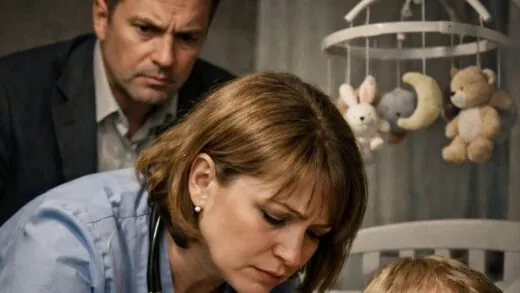
“Call the police. Tell them she’s endangering a patient.” Dr. Edwards sighed and leaned back in his chair. He looked at her with cold calculation.
“The police won’t move against Warren’s private security without a court order. That’s a fight we lose. But you don’t need to worry, Margaret.”
He stood, walked to the window, and looked out at the gray, rain-soaked city. “Without my medications and oxygen support, the girl won’t last a week. She’s severely intoxicated.”
“What that woman is doing is only delaying the inevitable. Without sedation, the nervous system won’t hold. Give it a few days.”
“The old man will come crawling back when the pain starts.” Margaret let out a long breath, trying to steady herself. She fixed her hair with shaking fingers.
“A few days, fine. But I’m coming every day. I want to see what’s happening.”
Exactly twenty-four hours passed. They were twenty-four hours of nonstop, exhausting battle. Michael never left the room.
He slept in short bursts in a stiff chair by the wall. Zemfira didn’t sleep at all. Hour after hour, she gave Sophie bitter infusions, rubbed her body to keep the blood moving.
She turned the girl so bedsores wouldn’t form, wiped her down with a damp towel, and cleaned away the cold sticky sweat that kept breaking over her skin. Sophie’s body, stripped of its usual chemical support, went through a brutal struggle. Her temperature rose and fell.
But by the morning of the second day, something happened Michael had hardly dared imagine. The girl’s breathing, which had been ragged and shallow, became even. She was still pale, but the frightening blue tint around her lips was gone.
Around noon, the door opened quietly. Margaret appeared on the threshold. Her face wore its usual mask of sorrow.
In her hands she carried a bouquet of white lilies, their sharp sweet smell mixing instantly with Zemfira’s bitter herbs. Margaret stepped in expecting to see a body—or at least a child in deep decline. She looked at the bed and froze.
The bouquet trembled in her hands. Sophie was awake. Her eyes were open. She looked exhausted, but aware.
The girl was no longer staring into nothing. She was watching Zemfira, who sat beside the bed wringing out a washcloth over a plastic basin. “Water,” Sophie said.
It wasn’t a moan. It wasn’t delirium. It was a quiet, hoarse, but clearly conscious word. The first word in a month.
Michael, dozing in the chair, opened his eyes at once and leaned forward. Zemfira immediately brought a cup of warm water to the girl’s lips. Margaret stood by the door, feeling cold sweat slide down her back beneath the cashmere.
Her plan was collapsing. The child was coming back. The chief physician’s assurances had been worthless.
If Michael saw real improvement, he would move Sophie out, surround her with specialists and security, and Margaret would lose access to Warren money forever. She forced a weak smile and stepped toward the bed. “Sophie, sweetheart, you’re awake,” she cooed, trying to make her voice sound tender.
Sophie turned her eyes toward her aunt. There was no joy in them, only dull fatigue. Zemfira, having finished giving the girl water, gently adjusted the collar of her hospital pajama top.
The fabric shifted, and something gold flashed at Sophie’s collarbone. A thick gold chain with a heavy family cross set with small diamonds. It had belonged to Sophie’s late mother, Margaret’s sister.
The girl never took it off. It was her keepsake, her protection, her memory of her mother. Margaret’s eyes locked onto the sparkle. The diamonds caught the hospital light and flashed with a cold, hard gleam.
Inside the mind of a woman cornered by debt and fear, the gears began spinning fast. She looked from the gold cross to the tired brown face of the woman in old skirts. Then she looked at Michael, who was watching Zemfira like a man ready to trust her with anything.
A rich, powerful old man who had trusted no one all his life. And a woman from the margins who now had unrestricted access to his family. Stereotypes are dangerous tools. All you need is the right spark.
Margaret’s greedy eyes narrowed. A faint predatory smile touched her carefully painted lips. In that moment, a mean and destructive plan fully formed in her mind—one that would not only ruin Sophie’s rescuer, but strip the girl of the help keeping her alive. Night fell over the city, hiding the cold wet streets beyond the dark hospital windows.
The VIP corridor was empty, lit by the flat hum of fluorescent lights. For the first time in weeks, no emergency alarms came from Sophie’s room. The girl was asleep.
Not the heavy chemical oblivion of sedation, but real, natural sleep. Her breathing was even. Her chest rose and fell steadily. A faint trace of color had returned to cheeks that had looked gray just the day before.
Michael and Zemfira sat on a sofa in the hallway a few steps from the closed door. Between them stood a low table with two cheap plastic cups of vending machine coffee gone cold. The billionaire, whose wealth ran into the billions, held the flimsy cup in both hands.
The heat burned his palms, but he barely noticed. He stared into the dark liquid as if answers might be hidden there. Beside him sat a tired, worn-out woman.
Her olive face looked drawn, dark circles under her eyes, but her back was still perfectly straight. Michael slowly lifted his head and looked at Zemfira. “I killed them,” he said suddenly.
His voice came out low and cracked, breaking the silence of the wing. Zemfira didn’t flinch. She turned toward him and listened without interrupting. “My son and his wife. I killed them,” Michael repeated, swallowing hard.
“That day there was wind, rain coming down in sheets, visibility almost zero. They were at the lake house, trying to rest, and I had a major merger closing. I needed my son’s signature.”
“He called and said the road was washed out. Asked to move it to the next morning. And I…” Michael stared at the floor. “I was used to the world moving on my schedule. I yelled at him. Told him if he didn’t come right then, I’d cut him out of the business.”
“I called him weak.” Michael set the cup down. His large, capable hands rested on his knees and clenched into fists.
“He drove in. Out of pride. To prove me wrong. The SUV spun on the wet road and went straight into a truck.”
“They never had a chance. Sophie lived because she was asleep in the back.” Michael fell silent. Breathing was hard.