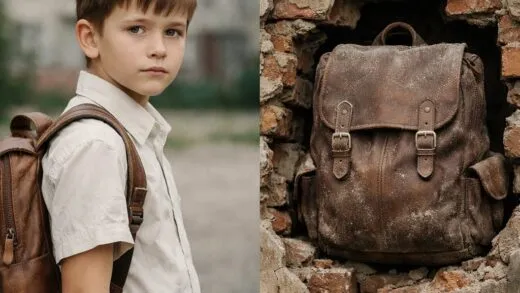

Alex sat on the edge of the garage, pulled out his phone, and did a search. “Classic car buyers.” A ton of ads popped up. Collectors, antique car dealers, auctions. He clicked on one. A photo of a Bel Air, similar to his grandpa’s. The price was thirty-eight thousand. And it wasn’t in perfect condition. The photo showed scratches and worn spots. His grandpa’s Bel Air was worth more, for sure.
But sell it? He didn’t want to. Grandpa had asked him not to sell it right away. He’d asked him to live with it, to drive it.
And then another thought occurred to him. What if he restored it? Not repaired it—it was already in excellent condition. But restored it to its completely authentic, original state. Replace the tires with the same kind they used in the 50s. Change all the fluids. Rebuild the engine if needed. And then drive it. Drive this car. Show it to people.
He could enter it in classic car shows. They had those, right? Alex searched again. Yes, they did. Classic car festivals were held regularly. People came from all over the country to show off their cars, compete in elegance contests. That would be interesting. To go to a show like that. To display his grandpa’s Bel Air. Maybe even win a prize.
But that would take money. For the restoration, for transporting the car, for entering the festival. Good thing he had money. Thirty-five thousand. He could spend some on the car. Some on living expenses. And put some away.
He also needed to sort out the paperwork. The car was registered in his grandpa’s name. He needed to transfer the title to himself. Get it inspected. Get insurance. A lot to do. But it was interesting. For the first time in a long time, Alex felt interested in something. Not just an obligation, not a routine, but a genuine interest.
He stood up, brushing off his jeans. He decided: today, he would deal with the paperwork. He’d go to the DMV, find out what he needed for the title transfer. Then he’d find specialists who could inspect the car and give him an official assessment of its condition. And then… then he’d see.
Alex went back into the garage and closed the door. He carefully covered the car with the tarp. He gathered his things. He tucked the money into his backpack and the letter into his breast pocket. He took one last look at the car.
“See you later, beautiful. I’ll be back soon.”
He left the garage, locking it behind him. He walked to the bus stop. It was a gray, overcast day. But to Alex, it suddenly seemed like the sun was shining brighter than usual.
Alex got downtown by noon. The whole way, he was planning his next steps. First, transfer the car title. Second, get it inspected by a specialist. Third, figure out his living situation. Fourth… he hadn’t figured out fourth yet.
He went into the nearest cafe, ordered a coffee and a sandwich. He sat by the window, pulled out his phone, and started looking up information on transferring the title of a classic car. It turned out to be more complicated than with a regular car. He needed an appraisal for authenticity, a valuation, and a pile of documents. But it was doable. Totally doable.
Alex jotted down the addresses and phone numbers of the necessary agencies. Then he opened up apartment rental listings. He found a few options not far from his job. One-bedroom apartments for $800-1000 a month. He called one of the numbers.
A woman’s voice answered.
“Hello?”
“Hi. I’m calling about the apartment on Main Street. Is it still available?”
“Yes, it is. Would you like to see it?”
“Could I see it today?”
“Today?” A pause. The rustle of papers. “How about four o’clock? Does that work for you?”
“That works. What’s the address?”
The woman gave him the address. Alex wrote it down, thanked her, and hung up. So, at four, he’d look at the apartment. In the meantime, he could take care of the car stuff. He finished his coffee and sandwich, paid, and went back outside.
The DMV was a twenty-minute walk away. Alex took his time, looking at the city around him. It was strange, but everything seemed different. Brighter, somehow. More alive. He noticed details he’d never paid attention to before. The intricate carvings on old buildings, the graffiti on walls, the faces of passersby. Maybe it was because he had hope now? Hope that his life could change, that not all was lost.
The DMV was crowded. Alex took a number, sat down, and waited for almost an hour. Finally, his number appeared on the screen. He went up to the counter. Behind the glass sat a woman in her forties, with a tired face and a bored expression.
“What can I help you with?” she asked without looking up.
“Hi. I need to transfer a vehicle title. It was an inheritance.”
“Do you have the vehicle’s documents?”
“Yes. The title.”
“Let me see it.”
Alex took the portfolio out of his backpack, pulled out the title, and passed it through the slot. The woman took the document and opened it. She glanced at it, and suddenly her eyes widened.
“Is this for real? A ‘53 Bel Air?”
“Yes.”
“And it runs?”
“Yes. It’s in excellent condition.”
The woman studied the document carefully, then looked up at Alex.
“You do realize this is a classic, right? That there’s a special process for registering these cars?”
“No, I didn’t. That’s why I’m here.”
She nodded, pulled out a folder, and flipped through it.
“Okay, to transfer the title for a classic vehicle, you’ll need: the certificate of inheritance, an expert appraisal of the vehicle’s authenticity, a market valuation, a technical inspection report, plus the standard packet—application, ID, and proof of paid fees.”
“Where can I get an expert appraisal?”
“There are a few places. Here, take this list.” She handed him a printed sheet with addresses and phone numbers.
“Thanks. How long does this usually take?”
“If all the documents are in order, two to three weeks. Maybe faster if you’re lucky.”
“Got it. Thanks a lot.”
Alex took his documents and left the building. He looked at the list of appraisal services. He chose the first one on the list. “Classic Auto Appraisals.” He called. A man’s voice, pleasant and professional, answered.
“Classic Auto Appraisals. How can I help you?”
“Hi. I need an appraisal for a classic car for a title transfer.”
“What’s the model?”
“A 1953 Chevrolet Bel Air.”
A pause. Then the voice, now with unconcealed interest:
“A ‘53 Bel Air? What kind of condition is it in?”
“Excellent. Almost perfect.”
“Seriously? Can you send photos?”
“I can. But I haven’t taken any yet. The car is in a garage; I just inherited it yesterday.”
“I see. Listen, would it be possible for us to come take a look? We can do a free preliminary inspection. If the car is really in that good of a condition, we’d be very interested.”
“Sure, you can. When would be good for you?”
“Tomorrow.”
“In the morning?”
“Tomorrow morning is perfect. Would ten o’clock work?”
“That works. Where should I meet you?”
Alex gave him the address of the garage. They made the arrangements. The appraiser introduced himself as Mike. He said he’d been working with classic cars for 20 years and had seen a lot of Bel Airs, but only a handful in perfect condition. Alex said goodbye and hung up.
Good. The appraiser was coming tomorrow. The process had begun. He checked the time. Three-thirty. Time to go see the apartment.
The apartment was small, but clean and cozy. First floor of a five-story building, with windows facing the courtyard. The furniture was old but in good shape. Fridge, stove, washing machine—everything was there. The landlady, a pleasant, talkative woman in her fifties, showed him around. She told him about the neighbors and the utilities.
“I moved to another city a month ago to be with my daughter,” she explained. “I decided to rent out the apartment for some extra income. A young man was living here, but he moved out yesterday. Found a place with his fiancée in another part of town. Are you looking for a long-term rental?”