
Grandma caught my eye from across the room. Her jaw was tight, but she didn’t say anything. She just came over, put a hand on my shoulder, and suggested we check the pies in the oven. In the kitchen, she gave me a squeeze. Some people show love by being there, and some show it with gifts. Both are okay, she told me, but the first one is the one that lasts.
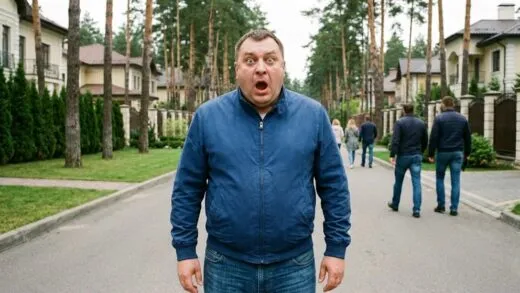
Steve was even worse. He tried not to even come inside. He’d sit in the car and honk until Diane came out. The few times Grandpa managed to drag him in, the tension was thick enough to cut with a knife. Grandpa didn’t respect him. It was obvious, and Steve knew it.
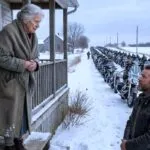
I was twelve when I overheard them arguing. Steve had dropped Diane off for a visit. Grandpa met him at the door.
— “One day this girl is going to grow up,” Grandpa said in that quiet voice that meant he was truly angry. “And she’s going to remember who was there. You still have time to change what she remembers.”
Steve actually laughed. A real, genuine laugh.
— “Save the lecture, Judge. Diane and I are doing fine. Allison is taken care of. That’s what matters.”
— “Taken care of?” Grandpa repeated slowly. “You think parenting is just cutting a check?”
— “It’s more than you did for Diane!” Steve snapped.
Those were the wrong words to say. Grandpa’s face turned to stone.
— “I raised my daughter. I was at every game, every concert, every milestone. She’s the one who chose to walk away from hers. Don’t you dare suggest I’m the one who failed.”
Steve drove off. He never tried to come inside again. As I got older, the visits became even more strained. Diane usually came alone. Steve was too busy with his failing business ventures to see his only daughter.
By the time I was fifteen, I stopped caring. I’d accepted the reality. They weren’t my parents. They were just people I shared DNA with.
I did well in school. Grandpa treated my report cards like they were evidence in a major trial. Straight A’s meant dinner at my favorite steakhouse. Winning a debate meant a trip to the city to see the high court in session. He made education feel important and exciting.
When I got into law school on a full scholarship, Grandma cried. Diane sent a text: “Good job.” Two words. That was it.
Law school was the first time I lived away from them. I called every Sunday without fail. Grandma would tell me about her garden, the neighbors, the little things that felt big because she was sharing them with me. Grandpa would ask about my classes, the professors, whether the curriculum was challenging enough.
During my second year, Grandma had a stroke. It was massive and sudden. She was planting tulips when it happened. A neighbor found her. Grandpa called me while I was in a lecture. His voice was so quiet, so broken.
— “Allison… she’s gone.”
I drove home through the night, six hours straight, crying the whole way. When I arrived, Grandpa was sitting in her garden in the dark, holding the tulip bulbs she hadn’t finished planting. I sat down next to him. We didn’t say anything; we just sat there together until the sun came up.
Diane came to the funeral. Steve too. They stayed for the service and left immediately after. They didn’t help with the arrangements. They didn’t help Grandpa pack up Grandma’s things. They just showed up long enough to be seen. And then they vanished. That was when I stopped making excuses for them. That was when I accepted that some people are fundamentally selfish, and you can’t change them.
Grandpa and I learned to live without her. The world was different. It would never be the same. But we had each other. Those Sunday dinners became sacred. Sometimes he cooked, sometimes I did, experimenting with Grandma’s recipes. Sometimes we just ordered pizza and watched old movies. The value wasn’t in the food; it was in the conversation. He started talking to me about his work in a way he never had before. The cases that haunted him. The decisions that kept him up at night. The weight of knowing your verdict could change a person’s entire life.
— “The law should be blind,” he said one night over dinner. “But the people who interpret it shouldn’t be. We bring our experience, our biases, our humanity to every decision. The trick is knowing when your humanity makes you more just, and when it makes you prejudiced.”
I soaked up every word.
— “You’re going to be a judge one day,” he told me when I was twenty-three and struggling with the workload. He was serious. “You have the thing you can’t teach—integrity. The ability to see what’s right, even when it’s not easy, even when it costs you something.”
After Grandma died, something fundamental changed between me and Grandpa. We became partners in survival. Two people who knew loss and decided to carry it together. The house felt empty without her, but it never felt lonely, because we filled it with memories and talk. And that unspoken understanding that we were all each other had left.
Law school was brutal, but I loved it. Every late night in the library, every mock trial, every moment I wanted to quit—I thought of Grandpa, of the legacy he was building not just in the courtroom, but in me. I graduated with honors. He was in the front row, filming the whole thing. My parents weren’t there. They sent a card. But I’d stopped being surprised by their absence years ago.
Getting a spot in the District Attorney’s office right out of school was partly Grandpa’s doing, though I didn’t know it then. I thought I’d earned it solely on my own: strong recommendations, good grades, a solid interview. Later, I found out he’d called in a few favors, vouched for me personally, promised I wouldn’t waste the opportunity. I didn’t.