
 Let’s Keep It Real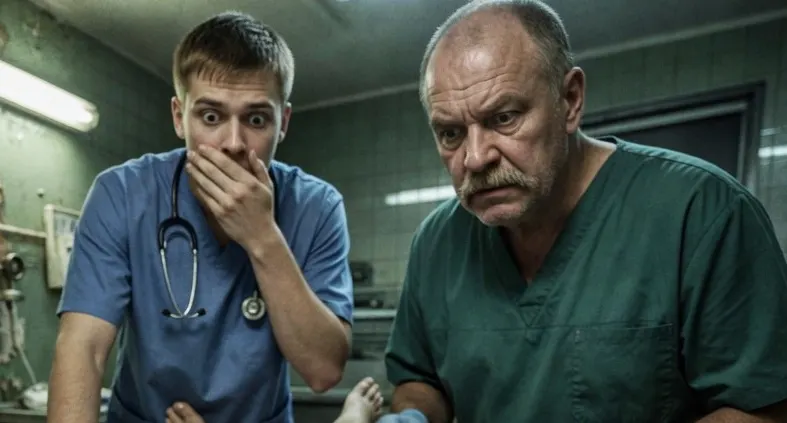
“Where on earth did she get worms in that wound?” the young doctor blurted out as he examined the pregnant woman they had pulled from a swamp. The nurse ran for the door, and the surgeon went still when he saw exactly where the larvae were moving. The rescue helicopter touched down on the pad behind the small county hospital at 12:20 a.m.
The engine was still whining when the doors flew open and two rescue medics pulled out the stretcher. Lucy, the night nurse, hurried out to the ER entrance and stopped cold. One arm hung limp off the side of the gurney—gray with dried mud, fingernails packed black underneath.
The smell hit first. Wet rot, stagnant water, decaying leaves. “Female, approximately thirty-five to forty, third-trimester pregnancy,” the flight medic said in clipped bursts without breaking stride.
“Found in a marshy lowland. Likely down there about five days. Open wound. Altered mental status. Blood pressure eighty over fifty.” They rolled her fast into the brightly lit exam room.
The young resident—thin, pale, only in his second month out of internship—pulled on gloves and reached for the filthy cloth wrapped around the woman’s thigh. He peeled back the makeshift bandage and recoiled so hard his slick gloves scraped the metal edge of the table.
The stool behind him clattered to the floor. “What is that? How did that even happen?” he whispered, voice breaking. In the open wound were long torn edges, and along them crawled pale larvae.
There were dozens of them, maybe more. They moved and writhed inside the wound, and the sight sent a cold wave straight up the back of his neck. Lucy let out a sharp gasp.
She clapped a hand over her mouth, turned, and hurried into the empty hallway. Through the glass door they could hear her shoes striking the tile, fading fast. The resident stood frozen, fingers trembling.
Then came another set of footsteps in the hall—heavy, steady, unhurried. In the doorway appeared Dr. Glenn Maslow, the senior surgeon they had pulled from the call room. Gray at the temples, broad hands, calm as if he had just stepped in for coffee.
Maslow took a disposable gown from the wall and pulled on a clean pair of gloves. “Dr. Maslow, there are live worms in the wound—a lot of them,” the resident said, still rattled. The older surgeon didn’t answer right away.
He stepped to the stretcher and bent low over the patient. His face was less than two feet from the wound. He studied it for a full minute, maybe longer.
The room was so quiet they could hear water dripping from a faucet in the corner. Then the surgeon slowly straightened. Something changed in his expression. Not disgust—recognition.
“Hold on,” he said quietly but firmly. “Don’t touch anything yet. Look closely. Where exactly are they crawling?”
The resident stared at the wound, then at the surgeon, then back again. The larvae were not moving over the whole leg. It was as if some invisible boundary held them in place and drew them toward one specific area. “You see that?” Maslow asked. He stripped off one glove and brushed the woman’s forehead with his bare hand.
Under the layer of grime, her skin was hot. Beneath the tangled hair, her lips moved faintly—no words, just the shadow of a sound. And then Maslow noticed something else. The bandage itself.
It was filthy and soaked through with swamp muck, but it wasn’t some random rag. The cloth had been wrapped in a very specific way: correct layering, proper spacing, then another layer. It had been done professionally.
Only someone who had dressed wounds thousands of times would bandage a leg that way. The surgeon turned slowly to the ashen resident. “Call OB now, and get ICU on standby. I want a full team.”
“She’s going to make it,” he said, as calmly as if he were stating the weather. The resident had no idea why he sounded so certain. But Maslow was no longer looking at him.
He was looking at the woman’s thin hands, caked with dried marsh mud, her fingernails torn bloody, and the large belly where a new life had just shifted. The smell of stagnant water, wet bark, and swamp peat filled the room. In that heavy smell was the whole story of her impossible journey—from some abandoned forest road through rough backcountry to this moment under the white glare of hospital lights.
Maslow knew that smell well. He had known it for a long time. The call that set everything in motion had come on a Thursday evening the previous July.
Valerie stood by the window in a rented one-bedroom apartment on the third floor of a plain brick building, one hand pressed against her lower back. It had been aching since morning. Seven months pregnant now, she felt every bit of it, and on the windowsill sat a mug of tea gone cold.
On the kitchen table lay an open road atlas, its corners bent and worn. Valerie had long since given up depending on GPS. After more than fifteen years of fieldwork, she trusted paper maps that never needed a battery.
The incoming number on her phone was unfamiliar, from a rural area code. “Hello?” she said, cautious.
“Val? This is Ruth Miller—your mama’s neighbor from Talbot Creek. You remember me, honey?”
Of course she did. Ruth was a big, warmhearted woman with work-worn hands who had lived next door and used to bring Valerie’s mother jars of homemade pickles.
“Yes, ma’am, I remember you. Hi,” Valerie said. There was a heavy pause on the line. Then Ruth’s voice dropped.
“Val, I’m calling about your mom.”
“She had a stroke a few days ago. A bad one. Been laid up about a week now. Her right side’s not working.” Ruth let out a tired breath.
“Our local EMT checks on her, but you know how it is out here. County hospital’s forty miles down a torn-up road, and the city’s more like seventy-five. Ambulance came, but they said she wasn’t stable enough to transport yet.”
Valerie said nothing. Outside the open window, neighborhood boys were bouncing a basketball in the parking lot, the rhythm sharp and nervous like a racing pulse. “She keeps asking about you,” Ruth added. “Every day she looks at the door.”
Seventeen long years. The last time Valerie had seen her mother, she herself had only been twenty. Her mother had stood on the porch of the old clapboard house with white trim and shouted after her.
No—she had yelled full force at her daughter’s back. “You’ll disappear out there, Valerie! You’ll get yourself killed in those woods!”
“Normal women build a home, raise a family, have babies with people who love them—not run off chasing God knows what…”
Valerie had not turned around. She had slung her heavy pack into the bed of a passing truck and left home for good.
First she went to paramedic school, then signed on with a volunteer medical mission, then took a long-term contract with an expedition hospital. Conflict zones, mountain camps, remote northern outposts, then deep forest again. Seventeen years of moving from place to place, field dressings, and sleepless nights in canvas tents shaking in hard wind.
Over the years she became one of the most dependable medics the service had. Valerie could splint a leg with tree branches, stop a major bleed with an improvised tourniquet made from her own belt, and close a deep wound by flashlight.
People wanted her on every difficult assignment. Supervisors wrote commendations she stuffed into a thick folder and never reread. Her mother never called once.
And Valerie never called her mother, either. Sometimes, late at night in some cold trailer at the edge of nowhere, with an old radio hissing and trees groaning outside, she would want badly to dial that number. Seven digits. She still knew it by heart.
But every time the same stubborn thought stopped her: She can call first if she wants to. Apparently her mother had been thinking the same thing. And now she’d had a stroke.
Paralyzed on one side. Unable to get out. “Mrs. Miller,” Valerie said, and her own voice sounded strange to her, “I’m coming. I’ll leave first thing in the morning.”
She set the phone down and lowered herself onto a kitchen chair. Her belly got in the way, her knees pressed awkwardly against the table. The baby shifted hard inside her, a strong rolling movement.




Share how the story made you feel
0Comments appear after a quick automatic check. Please no links, ads or personal data.
Next to your name we show your country, determined from your IP address; the address itself is never shown, and only a hashed fingerprint of it is kept to stop spam.