
he asked. I said I was looking for Emily. Silence for about three seconds.
Then the voice said, slow and clear, “Listen, brother. There’s no Emily here. And don’t call this number again.”
“If you care about that little tramp, forget this number. You understand?” Then the line went dead.
I stood by the road with the phone in my hand and stared at the screen. My fingers—fingers that hadn’t shaken in combat when I took out a sentry three yards from an enemy post—went numb. Something under that sheet of ice inside me shifted.
Not fear. Not anger. Not yet. A warning.
The same kind you get before an ambush, when the air turns thick and your skin tells you death is waiting ahead. I had to get back to the city. Five hundred miles.
I didn’t have money for a train ticket. At release they gave me $55, my ID, and a bag of personal effects: my old military watch, a cross, and a picture of Emily. I walked to the highway and hitched a ride.
A trucker, a man in his fifties, took me as far as the interstate. He looked at my prison boots, my buzz cut, my face, and understood enough not to ask questions. Gave me a ride, shared a couple sandwiches, kept the conversation light.
Good man. There are still good people in the world. After that, a bus.
Six hours rattling over broken roads. I sat by the window and watched the country slide by. Fields, woods, little towns with peeling paint and rusted chain-link fences.
It all felt familiar and foreign at the same time. Seven years earlier I’d ridden those same roads in shackles, with a split cheekbone and an eight-year sentence, of which I served seven before parole. Back then I thought life was over.
Now I was thinking about the voice on my sister’s phone, about the words “if you care about that little tramp.” And the longer I thought, the clearer it became. Life wasn’t over.
It was just getting started. The city met me with gray skies and the smell of factory smoke. A mid-sized industrial town in the South, one of those places where half the people used to work at one plant and the other half scraped by however they could.
I grew up there. Went to Jefferson High. Played ball in the lot between apartment buildings.
It was there too that I first saw Emily brought home from the hospital when I was thirteen and she was a red-faced bundle in my mother’s arms. I don’t remember my father. He left when I was five.
Mom raised us alone. Worked two jobs. Died of a stroke while I was on my second deployment in the southern mountains.
I flew home for the funeral for two days and then went back. Emily was fourteen then. After that, I was everything to her—brother, father figure, protector.
I was, until I went away. I made it to her address. Old three-story apartment building on Maple Street, third floor.
I climbed the stairs, and with every step the feeling grew that something was waiting behind that door I wasn’t ready for. I rang the bell. Nothing.
Rang again. Knocked hard. The door wasn’t locked.
It was just pulled shut. The lock had been busted. The latch hung loose in splintered wood.
I stepped inside and stopped. The apartment looked like no one had lived there like a normal person in a long time. Wallpaper peeling off in strips.
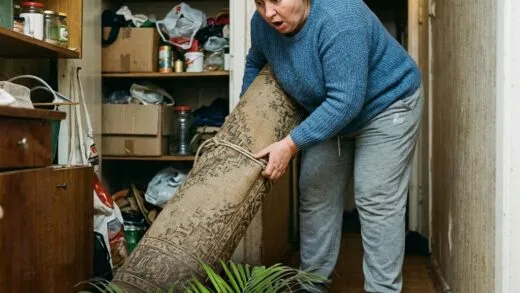
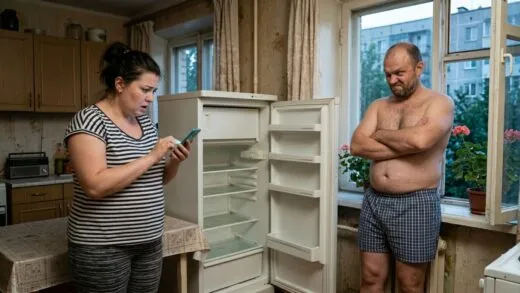
In the kitchen, a mountain of dirty dishes, empty bottles, cigarette butts in a saucer. In the main room, a mattress on the floor with no sheets, a balled-up blanket, pills scattered on the windowsill—I couldn’t tell what kind. And the smell.
Heavy, stale, the smell of poverty, sickness, and hopelessness. On the wall above the mattress I saw a photograph. Me and Emily.
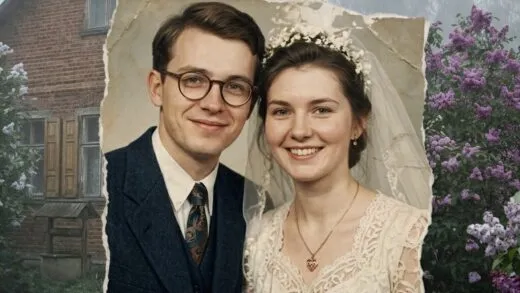
The same one from the jail visit. She was smiling, and I was standing behind the glass with a shaved head trying to smile back. The picture had been taped to the wall and worn soft around the edges.
She’d looked at it every day. Every day for seven years. And I had been behind bars, unable to protect her.
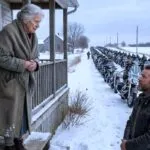
The neighbor across the hall, Mrs. Parker, a woman in her sixties with frightened eyes, opened her door with the chain still on and didn’t want to talk at first. Then she got a good look at my face. Recognized me.
“Ethan? Ethan, is that you?