
Zulfiya Akhmetova: the prison cook who fed the men in charge. A grim case from years past. February 23, 1979.
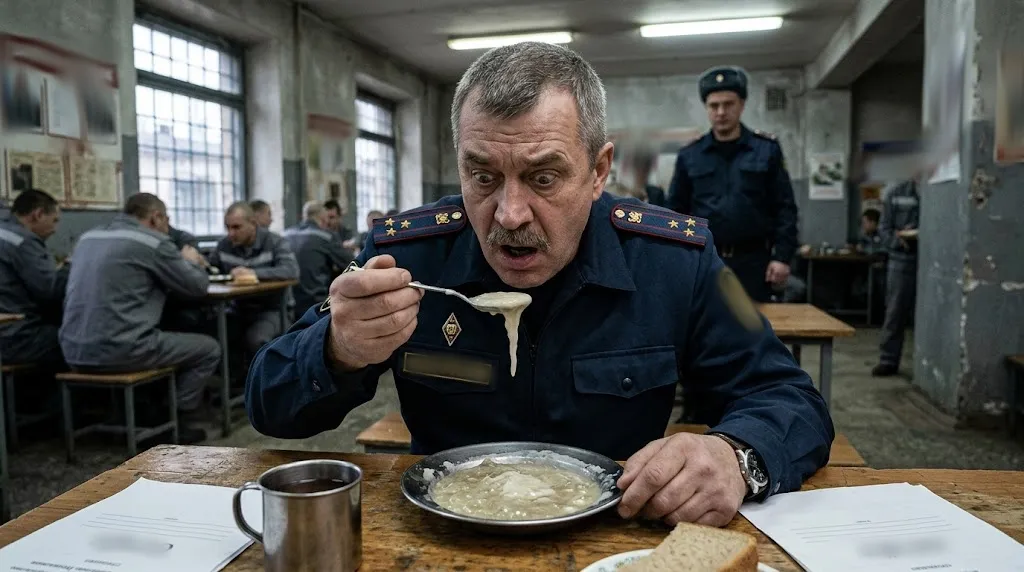
Soviet Kazakhstan. Karaganda region. Women’s correctional labor colony IK-14, known among the inmates as “Stepnaya.”
It’s 10:30 at night. Duty officer Fyodor Lykov climbs the stairs of the administrative building. The steps creak under his boots.
In his hand is the duty log, which needs the warden’s signature. It’s a holiday. The brass has been celebrating.
Not a sound comes from behind the office door, upholstered in brown vinyl. Lykov knocks. Silence.
He knocks harder. Still nothing. He pulls the handle.
The door isn’t locked. The smell hits first. Heavy, sweet, with a sour edge.
It doesn’t smell like vodka or cigarettes. Lykov flips on the light. Four men around the table.
Or rather, around what had been a table gathering. Lieutenant Colonel Zhuravlev is slumped face-first into a plate with scraps of pilaf. His right hand is still gripping an aluminum spoon.
Captain Galimov is curled up on the floor by the radiator. Foam on his lips, eyes rolled back. Senior Lieutenant Savchenko is on the couch by the wall.
His mouth hangs open, his face gray, like clay. And the fourth man, Lieutenant Kovalenko, is by the door, on his knees. One hand is clutching the doorframe.
Lykov rushes to Kovalenko. He’s still breathing. Ragged, whistling breaths, but breathing.
The other three are not. Within forty minutes the prison grounds are sealed off. Within two hours an investigative team flies in from Karaganda.
Three days later the case is classified “For Official Use Only.” And thirteen years later, in 1992, a reporter from the capital will find an older woman in Karaganda who calmly tells him: “I fed them exactly what they asked for. Just this time, I meant it.” But to understand why Zulfiya Kadyrovna Akhmetova did what she did, you have to go back.
Four years. To 1975. When she first crossed the threshold of Stepnaya and had no idea that one doorway would divide her life into before and after.
The Karaganda region is all steppe. Flat, bare, endless. In winter the wind can knock you sideways.
In summer the sun hangs overhead like a hot plate. The ground cracks. Spring is mud, fall is wind all over again.
Out there in that steppe, about 25 miles from Karaganda, stood IK-14. Four gray cinder-block barracks, an administrative building, a sewing shop, laundry, kitchen, mess hall, and infirmary. Everything ringed by double fencing topped with barbed wire.
Between the fences was a raked security strip where every footprint showed. Watchtowers stood at the corners with floodlights. Twelve hundred women behind the wire.
Thieves, swindlers, brawlers, killers. First-timers and repeat offenders. Women of many nationalities, many backgrounds.
All together, all behind one fence. Ages 18 to 63. Strict regime.
Wake-up at 6, breakfast at 6:30, work detail at 7, lunch at 1, back to work until 6, then supper. Personal time—an hour and a half. Lights out at 10. Same routine every day, 365 days a year.
No weekends, no holidays, no break in sight. The sewing shop had quotas. Work gloves, quilted jackets, prison uniforms.
The laundry had vats of boiling water. By evening, hands were red to the elbows and backs felt broken.
But the most important place in the colony was the kitchen. The only warm place in winter. The only place that smelled like food instead of bleach and sweat.
And the only place where a person might beg for an extra piece of bread. The kitchen meant power. And starting in 1976, that kitchen belonged to Zulfiya Akhmetova.
Zulfiya Kadyrovna Akhmetova was born in 1944 in the village of Karabulak, about 40 miles from Kyzylorda. Twenty adobe houses on the edge of the desert, a well in the middle, and a mosque without a minaret, torn down back in the 1930s. Her father, Kadyr, worked track maintenance on the railroad.
Her mother, Bibigul, kept house. There were five children. Zulfiya was the oldest.
Her maternal grandmother, Sholpan-apa, was a village herbal healer. Not a mystic, not a fortune-teller—just a practical country woman who knew plants. Which root to brew for stomach pain, which leaf to put on a boil, which weed you never fed livestock because it would kill them overnight.
Zulfiya went into the steppe with her grandmother from the age of six. By ten she could tell bitter wormwood from common wormwood by touch, eyes closed. She knew where monkshood grew: tall, blue-flowered, beautiful, and deadly poisonous.
She knew henbane too, with its dirty yellow flowers and sticky leaves. Her grandmother taught her: a plant isn’t good or evil. It’s force, same as a knife.
You can slice bread with a knife, or cut a throat. Zulfiya remembered it all, not for harm. Just because in the steppe, children learned what might matter someday.
After eighth grade, Zulfiya moved to Kyzylorda. She got a job at a meat-processing plant, first as a laborer, then in the warehouse. By twenty-two she was the warehouse supervisor.
Hard work, but decent money by local standards. Around $150 a month in today’s rough terms, and sometimes extra meat under the table. Everybody did it.
The director knew. Looked the other way. As long as production stayed on track.
In 1968 she married Ermek Satybaldiev, a truck driver from the same plant. Small wedding. Twenty guests, meat, vodka, homemade liquor.
Ermek seemed solid enough: hardworking, sober, respectful to his mother. A year later they had a daughter. They named her Aigul.
The first two years were fine. Ermek worked, Zulfiya worked, and Aigul stayed with her mother-in-law during the day. One-room apartment in a Khrushchev-era block on Lenin Street.
A wardrobe, a table, two beds, a crib. A wall rug with deer on it, bought on installment. A standard life for that time.
Not rich, not poor. Just ordinary. Then Ermek started drinking.
Not all at once. Gradually. Fridays with the guys after work, then weekdays too, then every day. By 1972 he wasn’t working anymore.
He was fired for absenteeism. Sat at home, drank fortified wine, sometimes vodka. Took money from Zulfiya.
When she refused, he hit her. Not with his fists at first—slaps, shoves. Pulled her by the hair.
Once he broke the little finger on her left hand. Twisted it when she tried to hide her paycheck. Zulfiya never reported him.
She’d been raised a certain way. You don’t take family trouble outside the home. You endure it.
The neighbors heard the shouting, but they kept quiet too. Apartment walls were thin as cardboard. Everybody heard everything.
Nobody said a word. On November 4, 1973, Ermek came home drunk. Zulfiya was feeding four-year-old Aigul porridge in the kitchen.
Ermek demanded money. Zulfiya said no. He went for the wardrobe, throwing things out, looking for her hidden cash.
He didn’t find it. He grabbed Zulfiya by the throat and pinned her to the wall. Aigul was screaming.
What happened next?