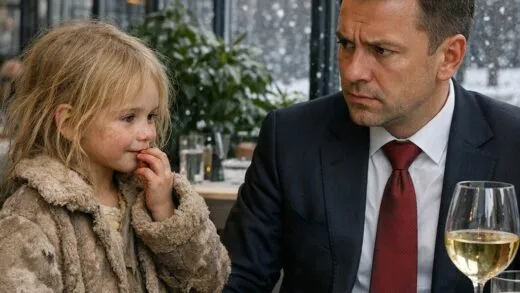
Claire looked at Robert. Should they tell him? It sounded crazy. But what did they have to lose?
— “Promise you won’t laugh?” she asked.
— “I promise.”
And so Claire told him about the gold bottle, the fountain in the courtyard, the old legend Lily believed in, and how the girl’s absolute faith seemed to be triggering a massive placebo effect in Pete. Dr. Miller listened in silence. When she finished, he was quiet for a long time.
— “You think water from a decorative fountain is the key?” he finally asked.
— “It sounds insane when you say it out loud,” Robert admitted. “But the improvements started exactly when she started her ‘ritual.’ His mind accepted it as a cure.”
— “That’s a hell of a coincidence,” Dr. Miller said. But his voice lacked its usual skepticism.
— “Maybe,” Claire agreed, “but what if it isn’t? The mind can do incredible things.”
— “I’ll have the water in that fountain tested,” the doctor finally said. “Who knows, maybe there’s a mineral content we’re overlooking.”
— “And if you find nothing?” Claire asked.
— “Then we have to admit that the human brain and the power of belief are still the greatest mysteries in medicine,” he replied.
Over the next few days, a routine was established. Lily came every day after school, did her water ritual, told her stories, and every day, Pete’s labs showed small but steady improvements.
The fountain water was tested. The results were exactly what you’d expect: ordinary city tap water. No magic minerals, no special chemicals. Just water. And yet, Pete kept getting better. Dr. Miller was at a loss. He brought in other specialists to review the case. They were all stunned.
— “It’s like his body just decided to fight,” one specialist commented. “As if a psychological anchor activated his immune system and started the repair process.”
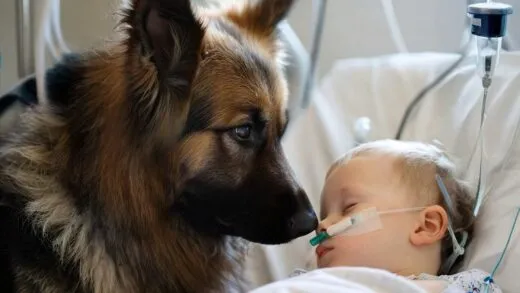
Robert and Claire knew what that anchor was. It was a six-year-old girl with a gold bottle and unshakable faith. On the fifth day after the doctors’ original deadline, Pete sat up in bed on his own. It was a small moment, but it felt monumental. Claire wept with joy. Robert had to step out of the room so he wouldn’t break down in front of his son.
When Lily arrived that day and saw Pete sitting up, she jumped for joy.
— “You’re getting better!” she cheered. “I knew it. I knew the water would work.”
— “Thanks, Lily,” Pete said. His voice was still thin, but it was stronger than before. “You saved me.”
— “I just brought the water,” Lily said modestly. “You did the hard part because you’re brave.”
In that moment, watching the two kids together, Robert realized something. It wasn’t about the water. It was about the belief, the care, the friendship. It was about having someone believe in you when even science had given up. And that connection was the best medicine of all.
Days turned into weeks. Pete continued to recover. He started eating more, staying awake longer, talking, laughing—being a kid again. The doctors were amazed. It defied everything they knew about his condition. But the labs didn’t lie. Lily kept coming every day. Sometimes she brought drawings, sometimes new stories. And she always brought her gold bottle.
One afternoon, about three weeks after the crisis point, something unusual happened. Lily’s grandmother, Mrs. Thompson, came to the hospital. She was a woman in her seventies with silver hair and a kind, lined face. Mary was at work, so Mrs. Thompson introduced herself to Robert and Claire.
— “She wanted to meet you,” Mary had told them earlier.
Mrs. Thompson walked into the room with a steady gait. She looked at Pete, then at Lily, and smiled.
— “So this is the boy my granddaughter has been looking after,” she said. Her voice was low and warm.
— “Mrs. Thompson,” Robert began, “your granddaughter has been incredible.”
— “She’s a special girl,” the grandmother agreed. “She has a gift for giving people hope.”
— “A gift?”