The cold pavement of the hospital parking lot bit into Anna’s knees through her thin jeans. She clutched the small bundle to her chest—her infant daughter, wrapped in a hospital blanket that smelled of antiseptic and heavy-duty laundry soap. The baby wasn’t crying.
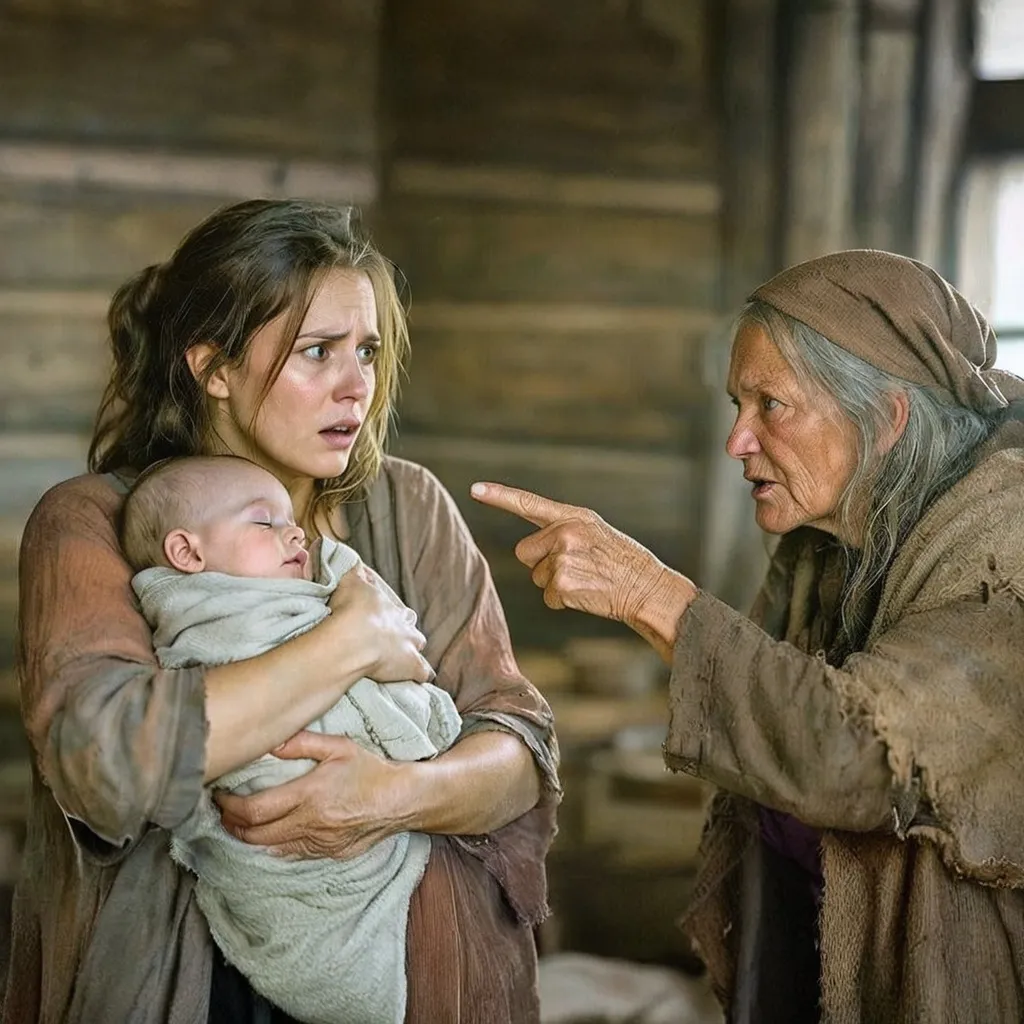
She wasn’t making any sound at all. Only her tiny chest rose and fell in shallow, rhythmic intervals: one, two, three breaths, as if each one might be the last.
— “Please, I need a ride! Fast!” Anna’s voice cracked, her plea echoing off the dark brick walls of the medical center.
A car slowed down, but seeing a sobbing woman with a limp child, the driver sped off. A second car passed by. Finally, an old sedan pulled over, smelling of stale coffee and pine-scented air freshener.
— “Where to?” the driver asked, his face lined with exhaustion.
— “Out to Oak Ridge,” Anna gasped, scrambling into the back seat. “Please, just go.”
The words of the night shift doctor still rang in her ears, spoken in that quiet, clinical tone: “Your daughter might not make it until morning. We’ve done everything we can.”
The car pulled away. Outside, the streetlights flickered by, casting yellow pools on the wet asphalt. Anna looked down at her daughter’s face—pale, waxy, with sunken cheeks. Three-month-old Lily weighed less now than the day she was born. The specialists couldn’t explain why.
How had it come to this?
Anna used to work double shifts at a diner on the main strip in town. The rag always smelled of industrial degreaser. Outside, the rain would drizzle against the glass, leaving long, jagged streaks. One afternoon, the bell above the door chimed. A group of three men walked in, shaking the water off their jackets. One was taller than the rest, with dark eyes and a steady gaze. He pulled back his hood and looked around.
— “Can we take that booth by the window?” he asked, nodding toward the corner.
— “Sure,” Anna replied, folding her rag. “What can I get for you?”
They ordered burgers and coffee. Anna took the order, feeling the tall man’s eyes on her—not in a rude way, but with a strange intensity, as if he were trying to solve a puzzle. When she brought the check, he asked:
— “What’s your name?”
— “Anna.” She set the bill down, avoiding eye contact.
— “I’m Mark.” He reached out for a handshake.
His hand was warm and firm. Anna shook it briefly and stepped back.
— “Have a good one,” she said, retreating to the counter.
He came back the next day. Alone. He ordered a black coffee and sat for two hours, scrolling through his phone but mostly watching her. When Anna went to wipe down the neighboring table, he spoke up:
— “Give me your number.”
She stopped, the rag tight in her hand.
— “Why?”
— “I’d like to take you out sometime.” He smiled, a simple, genuine expression.
Anna had spent her life moving from foster homes to cramped apartments with roommates who stole her milk. No one had ever asked her out just like that. She gave him the number. He dialed it immediately, and her phone buzzed in her apron pocket.
— “Now I have yours,” he said, finishing his coffee. “I’ll call you tonight.”
He did. They met at the park by the river. They walked for hours, talking about everything and nothing. He told her about his job at a law firm, how tedious the paperwork could be. She told her about the diner, and the time the cook mixed up the salt and sugar, ruining a whole batch of pies.
A second date followed. Then a third. Their first kiss was under a streetlamp where moths battered against the glass. His hands were steady on her waist.
Two months later, Anna stared at a positive pregnancy test, unable to breathe. Her hands shook as she dialed Mark’s number.
— “I need to tell you something,” her voice wavered.
They met at the park. He listened, hands in his pockets, watching her closely.
— “We’ll get married,” he said simply. “We’ll go to the courthouse tomorrow.”
— “Are you serious?” Anna gripped her purse strap until her knuckles turned white.
— “Of course. I’m not the kind of guy who walks away.”
The wedding was a month later. A quick ceremony with two witnesses: Mark’s colleague and Anna’s friend from the diner. The clerk stamped the paperwork like she was issuing a parking ticket. Mark’s parents didn’t show up. His mother sent a short text: “Congratulations. I’m busy.” His father said nothing at all.
— “Don’t worry about it,” Mark said, kissing the top of her head. “They’ll come around.”
They moved into Mark’s grandfather’s old house out in the country—a wooden fixer-upper with a sagging porch and a tin roof that groaned in the wind. It had been empty for five years and creaked with every step, as if resentful of the new occupants.
Anna scrubbed the floors and hung fresh curtains. Mark painted the nursery a soft yellow; the room smelled of fresh paint and promises. They bought tiny onesies and rattles that jingled. The pregnancy went well. Anna would rub her belly and imagine holding her daughter. The ultrasound showed a girl. She cried with relief at the sight of that tiny, flickering heart on the screen.
Seven months in. Anna was making dinner when the front door slammed.
— “Mark?” she called out.
He stumbled in, smelling of bourbon—sharp and sour. His keys clattered to the floor.
— “You know what?” He leaned against the doorframe. “My mother told me I was a fool.”
Anna set down the knife. Her heart began to race.
— “What do you mean?” she asked quietly.
— “She said if I left you, they’d buy me that condo downtown. A three-bedroom. And a new truck. All I had to do was… ‘fix the situation.'”
The knife slipped from Anna’s hand, clanking against the tile.
— “What?”