
I never thought a man could bury his own child and then get a message from him the very next morning. The doctors said sudden cardiac arrest happens. We buried my son yesterday, and at 3:00 a.m. a short phone call from the train station shattered the silence in my house.
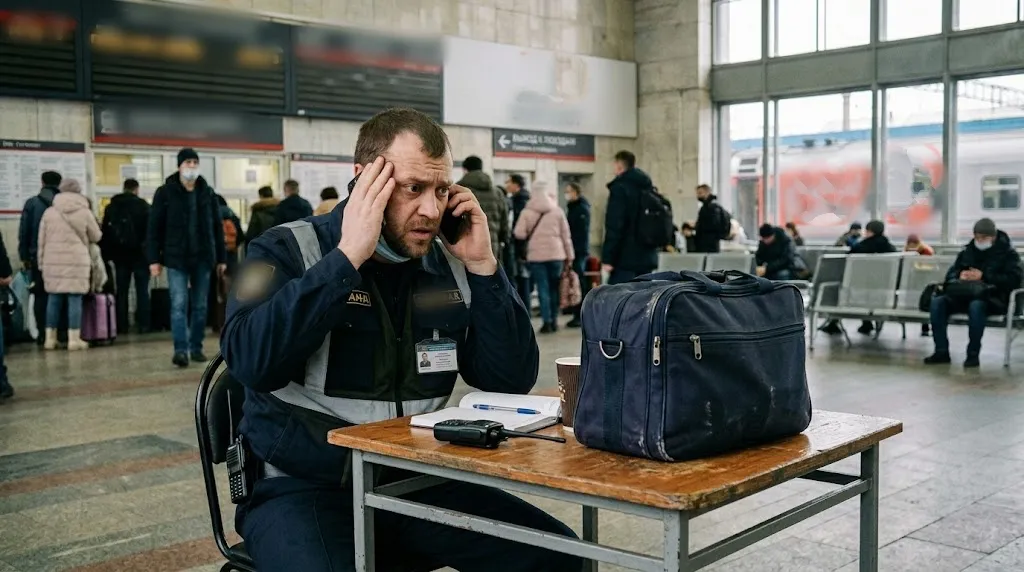
The caller told me my son had left a bag with my name on it. I ran for the car with a bad feeling I couldn’t shake. Inside the bag were cash, some notes, and a video file.
What I saw froze my blood. I spent thirty years looking criminals in the eye, but that video—and what my son told me from the screen—made me wish my heart had given out right then and there. What happened after that went beyond anything I ever thought I’d face in my own home.
The phone split the quiet at exactly 3:15. I dragged my head off the pillow, reached out, and picked up. A young man answered on the other end, stumbling a little over his words, sounding embarrassed to be calling so late.
He rushed through his explanation. He said he worked the night shift at the station and that a package had been left there for me. Then he read off a locker number and a code, adding that the storage had been paid for the day before by a man who identified himself as Eugene Harper.
I stopped breathing for a second, like an iron band had cinched around my chest. Gray spots floated in the dark. My only son had died Monday morning, and yesterday afternoon we buried him.
I sat there on wrinkled sheets in the dark, listening to the dead tone after the call ended. The cold worked its way inward, all the way to my chest, locking up my thoughts and limbs. My name is Arthur Hayes. I’m sixty-six years old.
I gave thirty years of my life to the law, first as an investigator and later as an assistant district attorney in a system that teaches you not to take anyone at face value. I retired five years ago and devoted myself to the house I built with my own hands, from the foundation to the roof. The loneliness of widowhood was eased by an old hobby of mine—restoring antique mechanical clocks.
Whenever I brought a frozen set of gears back to life, I found myself thinking that a clock is the only truly honest machine in the world. It either runs or it doesn’t. No middle ground. No lies built into it.
The need to move snapped me out of it. I dressed carefully, trying not to make a sound in the sleeping house. Downstairs, behind the guest room door, slept Linda, my thirty-eight-year-old daughter-in-law.
After the long funeral gathering, she had flatly refused to go back to the condo she and my son shared in town. In a soft, grief-heavy voice, she said she would stay here and look after her father-in-law now that he was alone. As I tied my shoes in the narrow hallway, I listened for the faintest sound behind the wall.
She had always seemed like a good match for a man who spent half his life in labs and field sites. She was attentive, quiet, knew how to be present when needed and disappear when someone needed space. Along with her came her nineteen-year-old daughter from a first marriage, Emily.
Emily was withdrawn, always looking down, never without her phone in hand, texting or taking pictures of one thing or another. The front door opened without a squeak and let me out into the damp chill of the yard. The engine turned over softly, and the headlights lit up the crooked lilac bushes by the gate.
I turned the wheel and drove through sleeping streets where only a few traffic lights blinked in the dark. The cold rubber on the steering wheel bit into my palms, but that physical discomfort helped keep me grounded. The instincts I’d spent a lifetime building—instincts I thought had gone quiet in retirement—were pounding in my temples now.
How does a healthy, careful forty-three-year-old man, a trained environmental scientist who understood toxins for a living, suddenly die of “cardiac arrest”? The dark storefronts and empty intersections sliding past my windshield pulled me back months, to when the trouble first crossed our threshold.
Gene had started changing about a year before that Monday. At first it was subtle. The energy went out of him. His shoulders slumped. Dark circles settled under his eyes. He lost weight, and the sharp, lively look he’d always had took on a strange, distant emptiness.
He began mentioning unexplained weakness, brain fog, and episodes of irregular heartbeat more and more often. His primary care doctor gave him a quick once-over and blamed overwork and stress. During those hard months, Linda turned into a full-time caregiver.
She took over his daily routine, drove him to one round of tests after another. Whenever I visited, I saw how completely she’d changed the family’s meals in the name of his health. Strange dishes started appearing on the table, and every breakfast came with a neat handful of colorful capsules and supplements she set beside his plate with a gentle smile.
Watching all that care, I felt nothing but gratitude. I was glad my boy, always buried in work, had found a calm harbor and a loyal partner. The ability to spot a lie, sharpened over three decades of interviews and interrogations, failed me in the one place it mattered most—inside my own family….