
 Let’s Keep It Real
Then he turned and went back into Michael’s room, slamming the door behind him and leaving Eleanor frozen in shock. Her legs gave out, and she slid down the peeling wallpaper onto the cold linoleum, covering her face with trembling hands. At that exact moment—just when hope seemed to have left the building for good—the screen of her old cell phone lit up in the dark kitchen.
An unfamiliar number with an international code flashed on the display, and the short text message nearly stopped her heart. With shaking fingers, Eleanor opened it, hardly daring to breathe. There were only three words, typed in clumsy Latin letters, but the meaning was unmistakable: “Mom, I’m alive.” And just like that, everything changed.
The message on the cracked phone screen shone like a lighthouse in the middle of a storm. Eleanor rubbed her swollen eyes and read the words again and again. Her heart surged with hope, but the reality of the man in the next room brought her back fast.
From behind the thin wall came the crash of furniture and Victor’s foul-mouthed yelling. Eleanor slipped the phone deep into the pocket of her faded robe as if it were gold, afraid that even a hint of good news might trigger another outburst. She knew enough by now to understand that Victor was capable of almost anything if he learned the rightful owner of the room might be coming home.
The following weeks became a kind of psychological siege. Victor, emboldened by the lack of consequences, openly brought shady operators into the apartment and used Eleanor’s kitchen to move stolen humanitarian supplies. Boxes of medicine and canned food meant for refugees were bought and sold right in front of her.
The sirens scared her less now than the late-night conversations she overheard through the walls—men discussing cash, stolen goods, and how to move them without getting caught. During those gatherings Eleanor sat for hours on the bathroom floor, hands over her ears, speaking silently to her son. Wherever he was, she begged him to hold on. She promised she would wait for him.
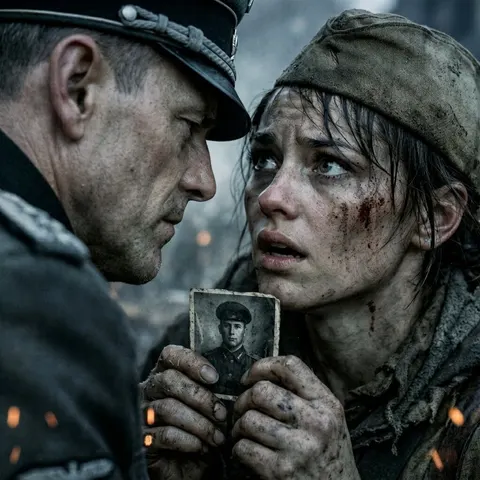
And hundreds of miles away, in a shattered eastern town, Michael Carter was doing exactly that—holding on. The wounded soldier came to in a damp basement that smelled of mold, blood, and dust. His head pounded from a concussion, and every breath sent pain through the shoulder where a bullet had torn through and been wrapped in a dirty field bandage.
A thin shaft of moonlight slipped through a broken vent, falling across the worn faces of the other wounded men beside him. Their position had been hit by heavy artillery nearly a month earlier, and since then they had been officially listed as missing. The survivors were cut off from their unit, with no radio, little food, and almost no medicine, hiding in underground ruins practically under the enemy’s nose.

Share how the story made you feel
0Comments appear after a quick automatic check. Please no links, ads or personal data.
Next to your name we show your country, determined from your IP address; the address itself is never shown, and only a hashed fingerprint of it is kept to stop spam.