
 Let’s Keep It Real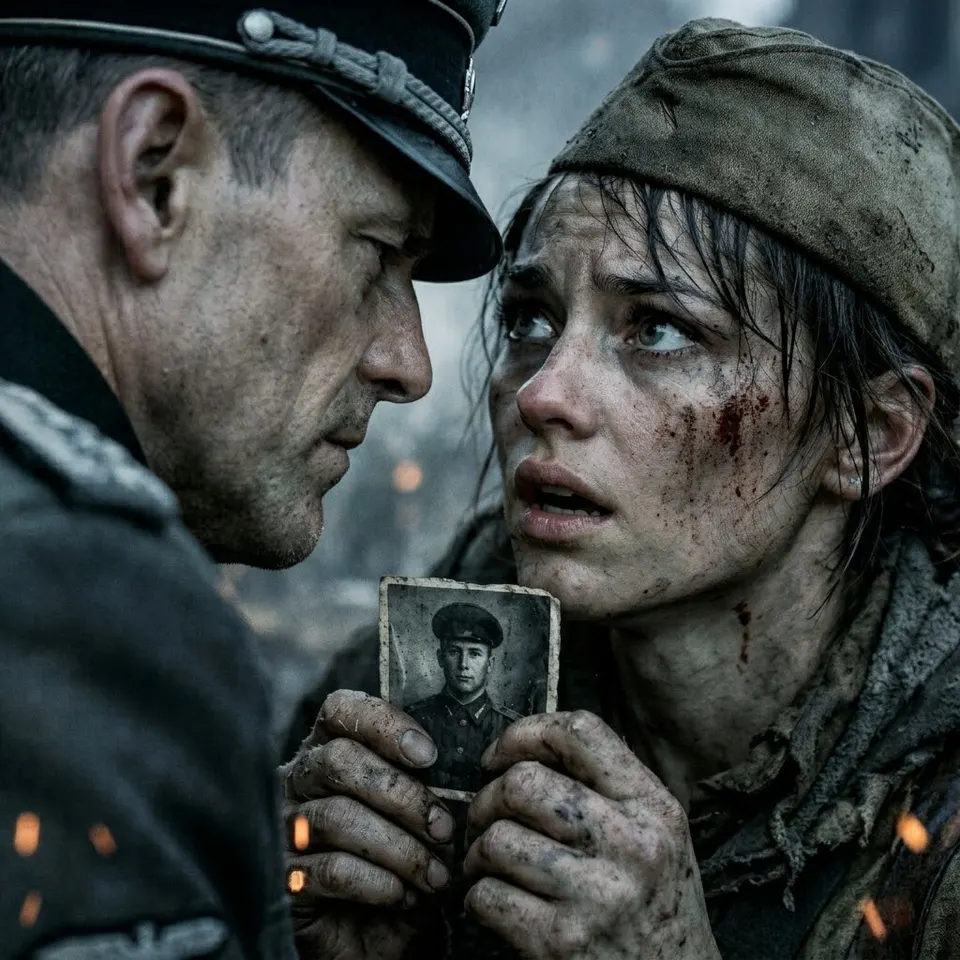
In 1943, a translator worked inside the headquarters of an occupied city. Enemy officers saw her as quiet, efficient, and completely harmless. Over two years, she passed along more than seventy intelligence reports. Those reports helped stop three major offensives and saved thousands of lives. Enemy counterintelligence never figured out where the leak was coming from, even though the answer had been sitting right under their noses the whole time.
She wore a plain dress with a white collar, kept her hair neatly pinned back, and had the kind of careful eyes that never lingered where they shouldn’t. But one day she saw something that made her heart stop cold. At a formal reception, she recognized her husband in an enemy general—the military pilot she had mourned and buried in her own mind two years earlier, at the start of the war.
Her name was Anna Severtseva. Before the war, she had lived in the capital in a small apartment downtown, the one she and her husband had received in 1939 after he graduated with honors from flight school. Her husband, Dmitry, was a military test pilot, one of those men people quite rightly called a top ace.
He was tall and broad-shouldered, with dark hair and a scar over his left eyebrow. He had gotten it as a boy after falling off the roof of a shed in his family’s southern village. Anna had met him in 1937 at a dance in the city park.
He had asked her to dance, polite as could be, and she noticed his hands right away. They were big and strong, but surprisingly gentle when he held her by the waist. A year later, they were married.
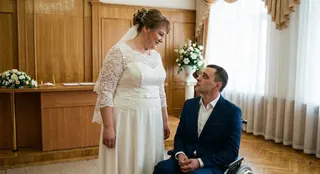
The wedding was modest, like most weddings in those days. A few close friends came, along with Anna’s parents. On the table sat a bottle of champagne and a pie her mother had baked. That evening, Dmitry said something Anna would remember for the rest of her life.
He said quietly, “Anya, whatever happens, remember this: I’ll still be with you, even if you can’t see me.” At the time, she took it as the kind of romantic thing a young husband says. Much later, she realized it had been a warning.
The war began on Sunday, June 22, 1941. Anna heard the news on the radio while she was making breakfast. Dmitry was already at the airfield outside the city. His unit had been called out before dawn.
She didn’t see him again for three long days. When he finally came home, worn down and red-eyed from lack of sleep, she burst into tears and threw her arms around him. His uniform smelled of aviation fuel and smoke.
He held her tight and said, “Don’t cry, Anya. We can do that later. Right now we work.” And that’s what they did. Anna took a job as an orderly in a military hospital, even though she had trained as a German teacher.
She had done exceptionally well at the pedagogical institute, where German was taught by a strict older professor who drilled pronunciation until it was flawless. Anna later found that Germans often took her for one of their own. In the first brutal months of the war, that skill had seemed useless.
It turned out to be invaluable. Dmitry, meanwhile, flew missions almost every day. In the fall of 1941, when the enemy pushed close to the edge of the capital, he was making three and sometimes four combat flights a day.
Anna waited for him every night, listening to the engines overhead and trying to guess which plane might be his. Stress made her lose weight. She barely slept. But she held herself together because he always came back.
Until December 15 of that terrible year, when he didn’t. The official notice arrived a week later. It was a cold government form with cold government language.
“Your husband, Senior Lieutenant Dmitry Alekseyevich Severtsev, was killed in action while carrying out a combat mission. His aircraft was shot down near the front line. The pilot’s body was not recovered.”
Anna read the notice three times. Then she folded it carefully, put it in the dresser, sat down on the bed, and stayed there until morning. She didn’t cry. She just stared at the wall.
The tears came on the third day, when the truth finally landed. He would never walk through that door again, never put those big hands around her shoulders, never say, “Don’t cry, Anya.” She buried him in her heart.
There was no grave, only memory and an old photograph on the dresser. In it he wore a flight helmet and a smile that always struck her as a little sad. Six months later, her life changed again.
In the spring of 1942, a plain-looking man in civilian clothes came to the hospital where Anna worked. He was short, with the kind of face you forgot immediately, and calm gray eyes that missed nothing. He asked her to step into the chief doctor’s empty office for a private conversation.
Anna went with him, not knowing what he wanted. Inside the office, he introduced himself briefly. His name and position made it clear he worked for an agency people generally did not mention out loud.
He told her the government was well aware of her excellent German. He said that skill was more useful to the country right now than her tired hands in a hospital ward. There was important work to be done, he explained, work he could not yet describe in detail, but work that would help bring victory closer.












Share how the story made you feel
0Comments appear after a quick automatic check. Please no links, ads or personal data.
Next to your name we show your country, determined from your IP address; the address itself is never shown, and only a hashed fingerprint of it is kept to stop spam.