
 Let’s Keep It Real
Crutch asked grimly. “Keep people occupied. Give them a purpose. Anything, as long as they’re not just sitting here thinking about where they are.”
Anna suggested something nobody expected. “Let’s start a school.” “A school?” the prisoners said, baffled. “The professor can lecture on history. One of the engineers can teach math.”
“The thieves can teach whatever they know. The point is to keep minds busy.” It sounded crazy, but sometimes crazy is the only practical option.
The first lecture was given by Professor Vorontsov. Topic: “Great escapes in history.” Everyone listened—thieves, politicals, even the guards by the door seemed to be listening.
“Ancient rebels held out in the mountains for two years. A huge army of escaped slaves against regular troops. Do you know why they lasted so long?” the historian asked.
“Why?” one of the younger thieves said. “Because they had more than a desire to survive. They had a picture of freedom in their minds. They were willing to die for it.”
“And did they?” “Yes. But people remember them for centuries. The names of the men who crucified them are forgotten.” After the professor, Old Man the thief spoke.
He told stories about a legendary king of city thieves. “He used to say a thief needs three things: a cool head, a warm heart, and clean hands.”
“Cool head to think. Warm heart so you don’t turn into an animal. Clean hands so you don’t spill blood unless there’s no other choice.” It was a strange school in a death car. But it worked: men were distracted, and their minds had somewhere else to go.
On the nineteenth day, something terrible happened. The literature teacher—the first man to start losing his mind—hanged himself. He used a strip torn from his shirt and tied it to the upper bunk while everyone slept.
In the morning Doctor found him and tried to cut him down, tried to revive him, but it was useless. “Why?” Anna stood over the body, and for the first time in all those days there were tears in her eyes. “We helped him.”
“You can’t always save a mind once it breaks,” Colonel Karelin said quietly. “Sometimes all you can do is delay it. He died the day they arrested him. His body just took longer to catch up.”
They sent him out through the same hole in the floor. But this time the professor did not read a prayer. He recited poetry. Half the car was crying.
Men who had not cried in years, thieves who considered tears a weakness, sat turned away, wiping their faces in silence. That evening Melnikov came, saw the second body, and smirked. “Well, Mikhailova, looks like your medicine doesn’t fix everything.”
“How much longer can you keep this up? A day? Two?” She looked up at him, eyes red from crying but steady. “Longer than you’ll live with what you’ve done, Captain.”
“Threatening me?” “No. Just stating a fact. Men like you don’t end well. Either your own people turn on you, or your conscience catches up.”
“I don’t have a conscience,” he said. “Everybody does. Some just meet it late.” Melnikov raised his hand to strike her again, then stopped.
Men in the car were standing up. Slowly. Quietly. Not shouting. Just rising one by one. Within a minute, all two hundred were on their feet.
“What is this, a mutiny?” Melnikov’s hand went to his holster. “No,” Crutch said. “It’s a warning. Touch her again, and some of us won’t care what happens next.”
“Two hundred men with nothing left to lose against your convoy. Somebody gets to you.” Melnikov backed toward the door.
“We’ll see how brave you are when we arrive. The camp has its own rules,” he said, and left. The men sat back down.
They had done it without shouting, but something had changed. They were no longer just victims. They had become a community, a kind of family. Hard to call it anything else. Anna was no longer simply the woman in the men’s car.
She had become their conscience, their humanity, and their hope. And there were eleven days left until the final station. Day twenty.
The train stopped at some forgotten station. Cold morning air slipped through the cracks in the walls. They were climbing higher into the mountains, and even in September it was getting cold.
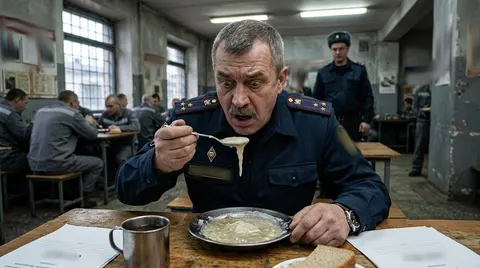
“Water! They’re bringing water!” the man near the door shouted. But when the guards opened the door, instead of the usual buckets they brought only two cups for two hundred men.

Share how the story made you feel
0Comments appear after a quick automatic check. Please no links, ads or personal data.
Next to your name we show your country, determined from your IP address; the address itself is never shown, and only a hashed fingerprint of it is kept to stop spam.