The ice in Michael Stanton’s whiskey glass clinked softly as he tapped his fingers against the polished mahogany table. The Imperial sat inside a restored historic mansion in the heart of the city. Ornate plaster ceilings, crystal chandeliers, and heavy velvet drapes gave the place an old-money kind of elegance.
This was where the city’s biggest deals got done, and tonight might be the biggest deal of Stanton’s life. The antique clock in the corner struck seven, and right on cue the restaurant doors opened to admit a tall silver-haired man in an immaculate suit. Arthur Vance, owner of Capital Trust Bank, crossed the room with the easy confidence of a man used to having space made for him.
Two security men followed several steps behind.
“Michael,” Vance said, extending his hand. “Hope I didn’t keep you waiting.”
Stanton stood and smiled with the measured warmth that comes naturally to men who’ve spent years in high-stakes negotiations. At forty-five, he looked ten years younger—fit, sharp-eyed, with just enough gray at the temples to suggest experience rather than age.
“Arthur, you’re right on time as always.”
Stanton shook his hand firmly.
“Glad we could finally do this in person.”
After the usual pleasantries, they sat in a reserved alcove that offered just enough privacy to make serious business possible.
“So, Michael,” Vance said, taking a sip of water, “are the documents ready to sign?”
“Completely,” Stanton said, nodding toward the leather briefcase at his feet. “But before we get to the paperwork, I thought we might mark the occasion.”
He signaled the sommelier, and within a minute a bottle of twenty-year-old Château Margaux appeared on the table.
“Excellent choice,” Vance said approvingly, watching the ritual of the uncorking.
Stanton smiled. Over the past fifteen years, he had gone from junior broker to head of a financial empire. Buying a major city bank was supposed to be the crowning move of his career—the step that would turn his investment firm into a full banking powerhouse. The sommelier poured the wine and stepped away.
Vance raised his glass.
“To a successful deal.”
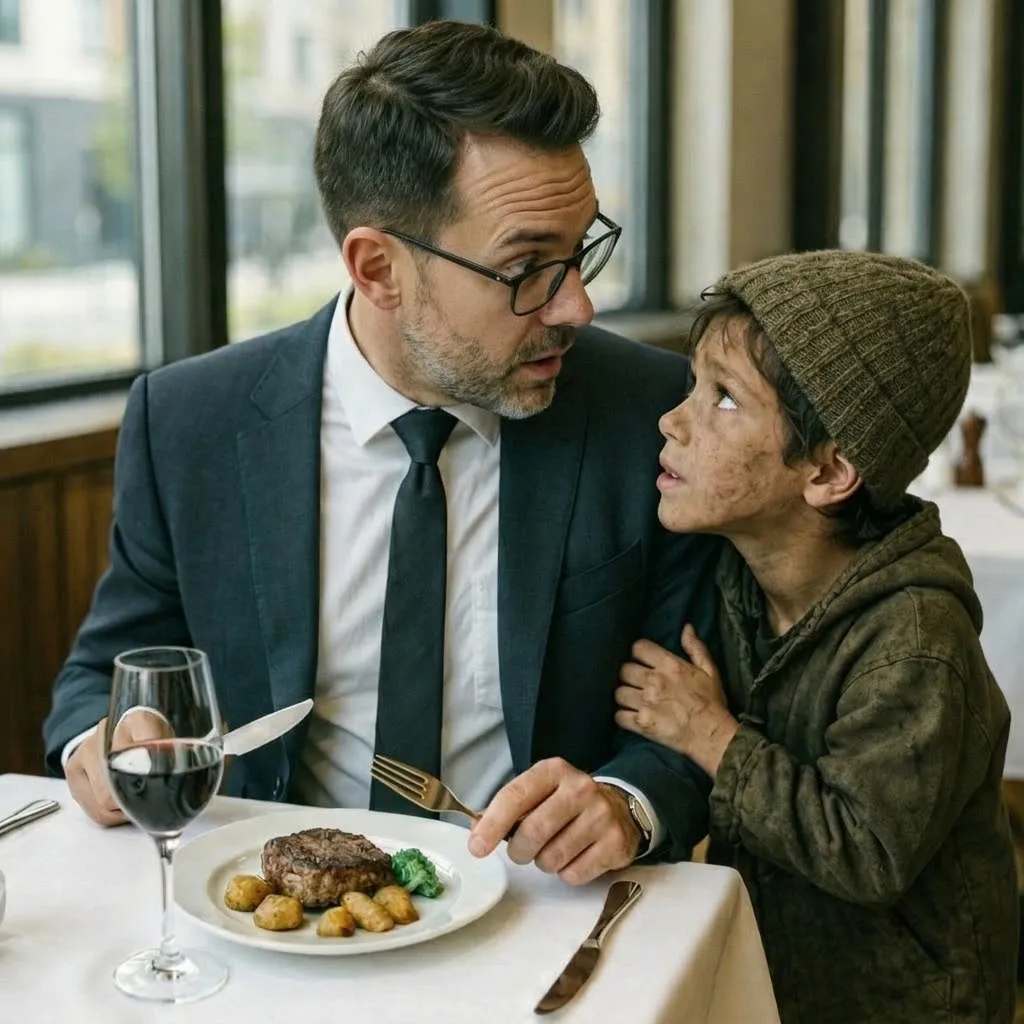
Stanton was just about to answer the toast when he caught movement out of the corner of his eye. He turned and saw a boy, maybe thirteen or fourteen, who had somehow slipped past security into the VIP dining room. In a worn track jacket, with dark hair sticking up every which way, he looked wildly out of place in the polished setting of the restaurant.
“Sir,” the boy said, leaning toward Stanton, his eyes bright and urgent. “You need to leave. Right now. They came for you.”
Vance frowned.
“What is this? Security!”
Stanton was ready to wave the whole thing off, but something in the boy’s face stopped him. The eyes—an unusual pale gray, the same steel shade as his own—held his with a kind of desperate certainty.
“Who came?” Michael asked before he could stop himself.
“A bunch of federal guys. They’re checking IDs at the entrance. You need to go. Now.”
Security and the maître d’ were already hurrying toward the table, but Stanton raised a hand to stop them. The kid spoke with such conviction he sounded like he really knew something. And that look on his face… Stanton felt a strange, tight pull in his chest.
“Security, do you see this—” Vance began, but just then there was a commotion near the front entrance.
Stanton turned and saw a group of men in plain clothes showing credentials to the manager. Years in finance had given him a near-animal instinct for danger. And right now every instinct he had was telling him the same thing.
“Excuse me, Arthur,” Stanton said, rising quickly. “I need to step away for a minute. Urgent call.”
Vance looked baffled, but didn’t object. The boy had already slipped toward an unmarked door in the corner of the room, and Stanton, acting on pure impulse, followed him.
They found themselves in a narrow hallway leading to the kitchen. The sounds and smells of restaurant life hit them all at once: clattering dishes, sizzling pans, shouted orders from the head chef.
“This way,” the boy said, moving fast through the kitchen, weaving between startled cooks.
“Hey! Where do you think you’re going?” one of them shouted, but the boy was already pushing open a door marked “Staff Only.”
They stepped out into a narrow alley behind the restaurant, where dumpsters lined the wall and several employee cars were parked.
“Hurry,” the boy said, almost breaking into a run along the side of the building. Stanton, still not fully sure what was happening, followed.
They rounded the corner just as two black SUVs without markings pulled up to the restaurant’s main entrance.
“Who are they?”