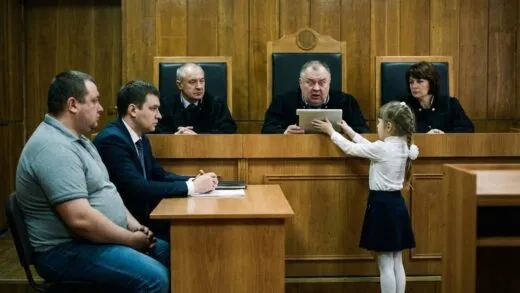
He wouldn’t earn three hundred thousand in compensation in three years at the job he had left.
The vegetable warehouse was located on the outskirts of the city, in an industrial zone that smelled of rotten cabbage and exhaust fumes. Maxim got a job there through an acquaintance who promised they wouldn’t check his work record, as long as he carried sacks and wasn’t late. The night shift started at 11 p.m. and ended at 7 a.m.
28,000 a month. Of that, 9,000 went to alimony immediately after the court’s decision, and 7,000 for the room in the dormitory on Zarechnaya Street. That left 12,000 for food, transport, and cigarettes.
Maxim counted every kopeck, bought the cheapest pasta and canned goods, and walked to work to save on the bus fare. He carried sacks of potatoes and onions, loaded crates of cabbage into trucks, and his back ached so much that by morning it was impossible to straighten up.
The foreman, Semyonych, a man in his sixties with a red face, yelled at everyone equally, making no distinction between newcomers and old-timers. Maxim kept quiet, carried the sacks, and thought about how just a year ago he had been a section foreman, and now this.
Lyudmila Vasilievna was discharged from the hospital after two weeks. Dr. Kuznetsov gave her a certificate for a second-degree disability, a list of medications three pages long, and indifferently advised her to take care of herself. She could barely walk to the bus stop. Every step was an effort, her chest felt tight, and her hands trembled.
Maxim met her at the bus station. His mother had lost weight, looked gaunt, and moved like an old woman, although she was only 58. They took a bus to his dormitory, and for the whole ride, Lyudmila Vasilievna was silent, just staring out the window with dull eyes.
— “I can’t support you, Mom,” Maxim said that evening as they sat in his 12-square-meter room with a shared toilet down the hall. “My salary is twenty-eight thousand, nine goes to alimony, seven for housing. I don’t have enough for myself.”
Lyudmila Vasilievna looked at her son and didn’t recognize him. This stooped, haggard man with lifeless eyes didn’t look like her Maxim—the successful foreman who, just a month ago, had been driving a foreign car and earning forty-five thousand. She wanted to say something, but the words stuck in her throat.
— “Call Tatyana,” Maxim turned to the window. “Maybe she’ll agree to take you in. I really don’t have the means.”
Lyudmila Vasilievna called her sister the next day. Tatyana lived in the village of Sosnovka, a hundred kilometers from the city, in an old house with a stove for heating and a well in the yard. They hadn’t spoken in about five years, ever since they had argued over their mother’s inheritance.
— “Well, come on over,” Tatyana said reluctantly, her voice cold. “But I’m not going to be your servant, you’ll have to manage on your own. I have enough problems of my own.”
Lyudmila Vasilievna packed her things in an old bag, and Maxim took her to the bus station in a taxi. He spent his last money. They said goodbye in silence, and as the bus pulled away, she looked out the window at her son standing on the platform, stooped and lost, and understood that she would never see him again.
Svetlana found out what had happened to Maxim from colleagues at the workshop. At first, she didn’t believe it. Then she called a mutual acquaintance, who confirmed it: he was fired, working as a loader, paying alimony, his mother was sick.
Svetlana looked at her phone, where there were several unread messages from Maxim, and typed a reply: