
 Let’s Keep It Real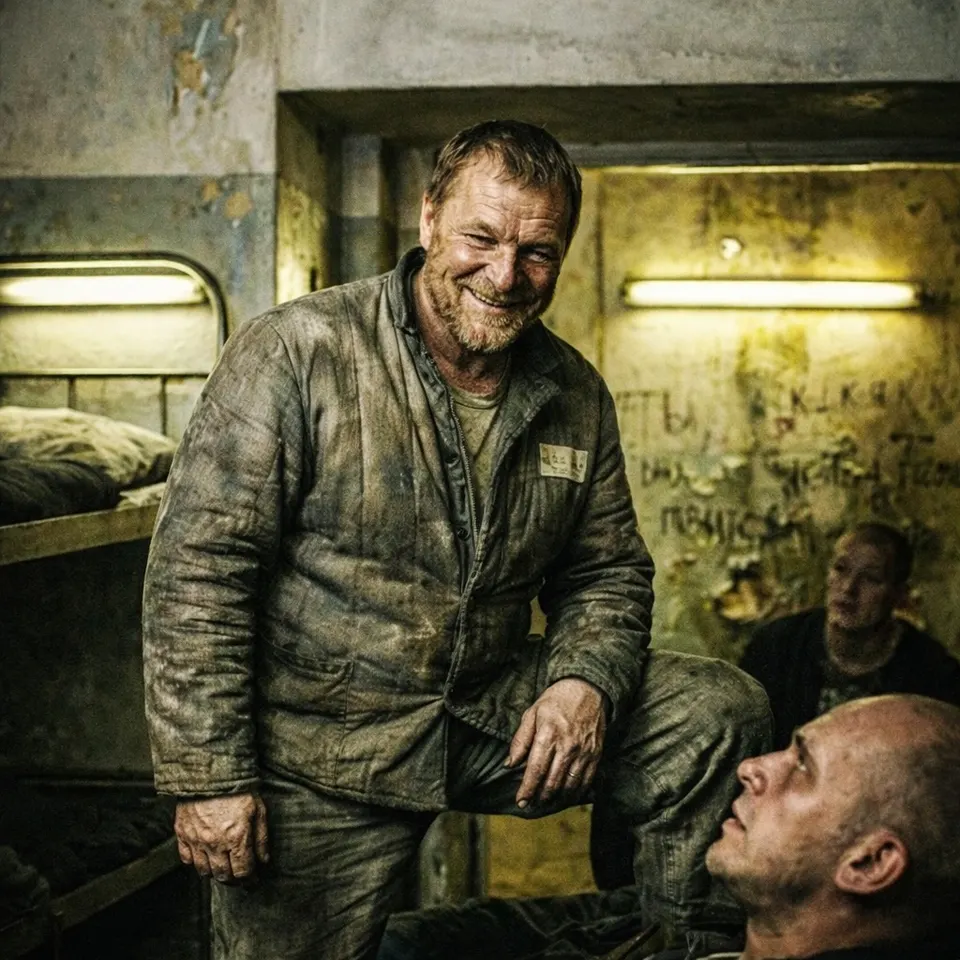
Outside the thin walls of the barracks, the cold snapped at 50 below, the kind of cold that could split a pine trunk. Inside, the air was stale and heavy, thick with cigarette smoke, unwashed bodies, and rotting wood. But right now, that familiar prison stink was being overpowered by something else.
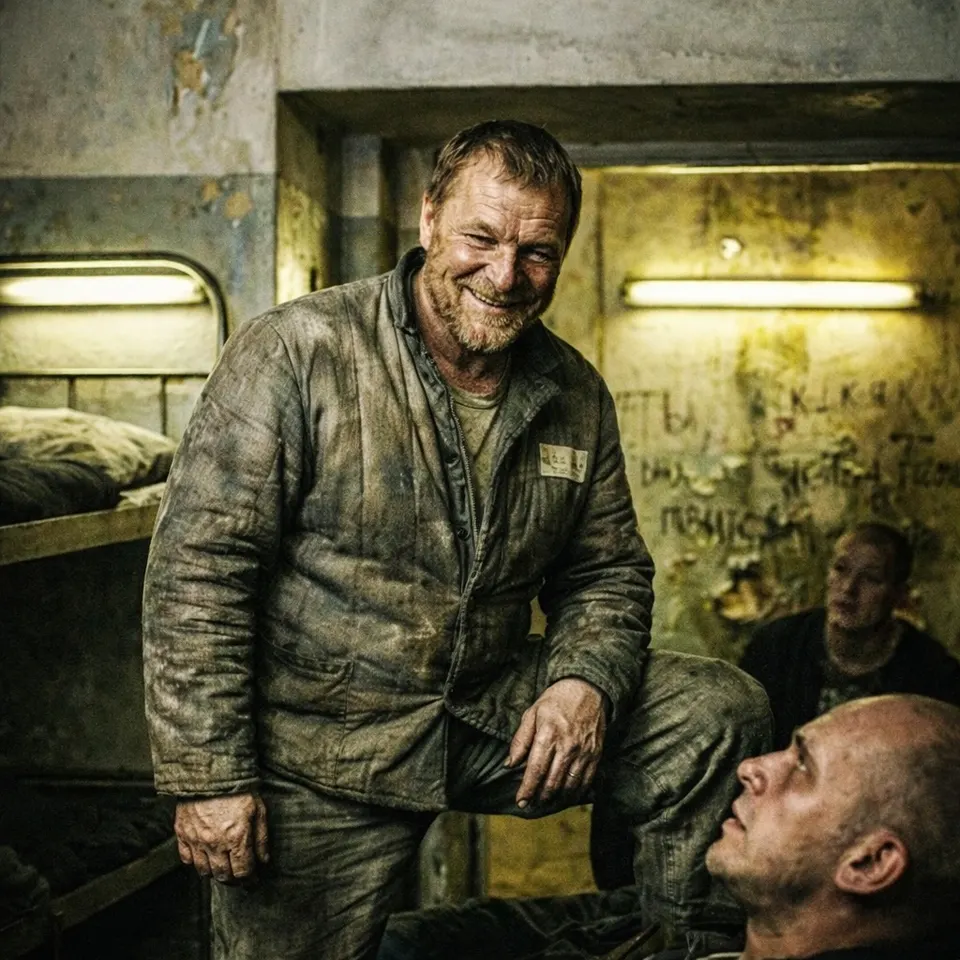
The sharp, metallic smell of fresh blood. On the filthy floor by the iron stove, a man writhed in pain. His face was a bloody mess, and his right arm bent the wrong way at the elbow.
The man who had been the chief bully of this barracks just a minute earlier was now whimpering like a beaten stray. Standing over him was the new arrival. A skinny young man in cracked glasses, with an intelligent face and the long, narrow fingers of a piano player.
He wasn’t gasping for breath. His hands weren’t shaking. He simply straightened the collar of his state-issued coat and looked around with a gaze that held no fear. Just cold calculation.
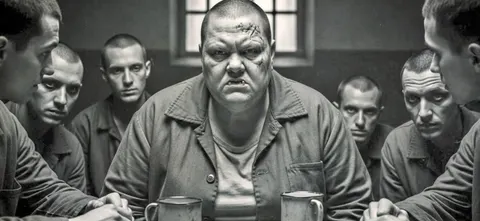
From the top bunk, the best spot in the room, the boss known as Bear watched the scene unfold. A hardened convict who had survived every layer of this private hell. A man who could silence forty grown men with one look.
Now his face, usually flushed from strong prison tea, slowly went pale. The cigarette hanging from his mouth dropped onto the blanket and burned a hole in it. He didn’t even notice.
Bear understood that the world he had spent years building had just collapsed in front of him. It had started only four hours earlier, when the heavy door creaked open and a new transfer was shoved into the barracks with a gust of frozen air. His name was Alex Walker.
He was 20 years old, a third-year physics and math student at a state university. He’d been convicted on a political charge as an enemy of the state. The investigator pinned a sabotage case on him because he refused to sign a false statement against his faculty advisor.
To the men in the barracks, Alex looked like the perfect victim. A college kid. Glasses. Soft hands. In the camp food chain, men like that didn’t last long, and they lived even worse.
Their job was to wash socks, hand over their bread, and slowly die by the draft near the latrine. Bear didn’t even bother greeting the newcomer. He lazily nodded to his top enforcer, a giant called Thunder.
“Check out the student,” the boss muttered. “Let him tell us a story, and while he’s at it, he can hand over those boots. Mine are shot.” Thunder, a brute with fists like cinder blocks and the brains of a fence post, jumped down from his bunk.
In his hand, a sharpened metal file flashed under the light. The barracks fell silent. Forty pairs of eyes locked on the center aisle because everyone knew the script.
In another minute the student would be humiliated, beaten, stripped, and assigned a place by the bucket. Thunder stepped right up to Alex, breathing stale liquor into his face. “All right, professor, take off the boots before I break your legs.”
“I’ll count to three. One...” Alex stood perfectly still. No one in the barracks knew that his father, a regular army officer executed during the purges, had managed to teach his son more than a love of science.
He had taught him leverage, momentum, and the body’s weak points. Alex wasn’t a fighter in the usual sense. He was a physicist. A man who knew exactly how structures fail.
When Thunder swung to smash the handle of the sharpened file into Alex’s temple, time seemed to tighten. Alex didn’t flinch. He took one short step forward, moving into the dead zone of the strike.
The sound was dull and sickening. Alex caught the man’s wrist and, using the momentum of the swing itself, simply turned his torso. There was a dry crack. Thunder’s elbow came apart.
The convict howled, but Alex didn’t stop. With a second economical motion, he drove the heel of his hand straight into the man’s throat. Thunder gagged, clutching his neck, and crashed to the floor, knocking over a bucket of water.
The sharpened file clattered across the boards. Alex didn’t finish him off. He just stepped back, adjusted his glasses, and said calmly, “Newton’s third law. For every action, there’s an equal and opposite reaction.”
“Any other questions about physics?” The barracks froze. Men who had seen stabbings and murder in their lives stared at the student as if he were a ghost.
But the most frightening reaction was Bear’s. The boss slowly climbed down from his bunk. His authority, built on Thunder’s brute force, had been destroyed in ten seconds.
Standing in front of him was not a helpless outsider but someone he couldn’t read. Someone more dangerous than any knife-wielding convict. Bear understood that if he didn’t kill this kid now, power in the barracks would shift by morning.
But there was such icy emptiness in Alex’s eyes that for the first time in his life, Bear felt real fear. He didn’t attack. “Pick your own bunk,” he said hoarsely, then turned toward the wall.
Alex walked to an empty bunk in the middle of the room, sat down, and closed his eyes. He had won the first round, but he knew perfectly well that this was only the beginning. At night, when the lights went low, the laws of physics would give way to the laws of treachery.
And the real fight to stay alive was just getting started. The silence in the barracks was deceptive, thick and sticky as tar. After two orderlies dragged Thunder off to the infirmary, whimpering and clutching his broken arm, no one said a word.
Forty grown men pretended to mind their own business: patching coats, rolling cigarettes, slurping thin soup. But every one of them could feel the tension coming from the corner where Bear sat on the top bunk like a spider at the center of a web. Alex sat on his new bunk and understood exactly what had happened.
In physics, it was called a conversion of potential energy into kinetic energy. He had disturbed the balance of the system, and now the system would try to restore itself by destroying the source of disruption. An older inmate with a dried-out face and eyes full of bottomless weariness sat down beside him.









Share how the story made you feel
0Comments appear after a quick automatic check. Please no links, ads or personal data.
Next to your name we show your country, determined from your IP address; the address itself is never shown, and only a hashed fingerprint of it is kept to stop spam.