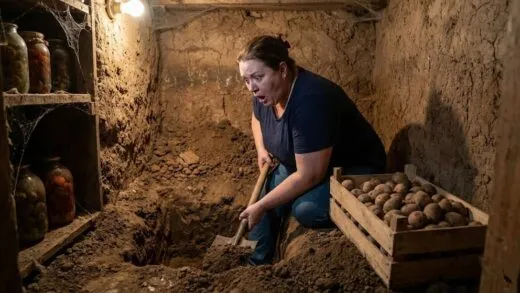
Paul Thompson lived to be 89. He spent 40 of those years in the same office on the third floor of the Midvale Manufacturing administrative building, a place that smelled of machine oil, office glue, and that faint, institutional scent that seeps into the walls of any long-standing company and never quite airs out, even after a renovation. He was the Chief Accountant.
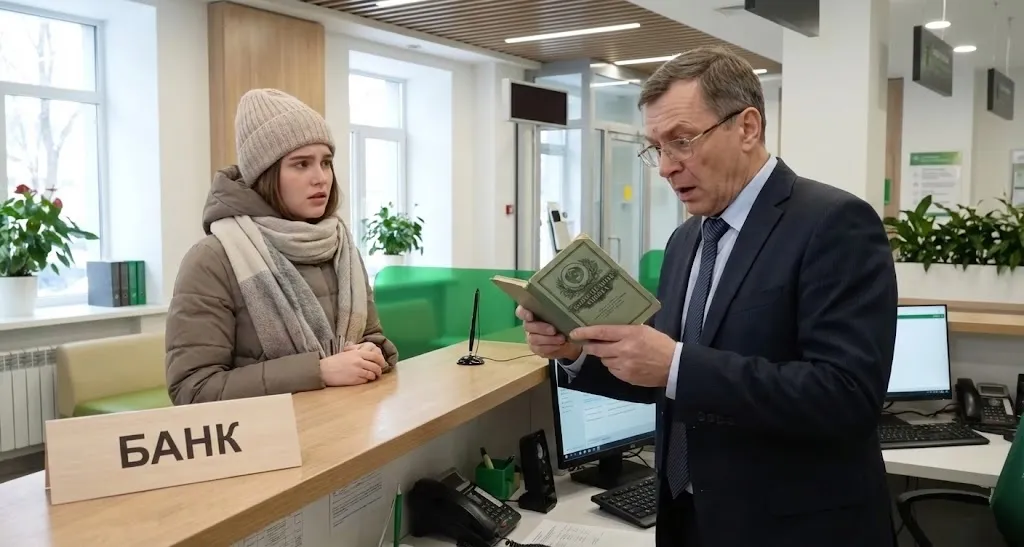
It was a job many considered dull, a paper-pusher’s life devoid of excitement, but he had turned it into an art form. Every number in his ledgers was perfectly placed. Every discrepancy between credits and debits was immediately flagged and noted in a separate notebook he called his “Anomaly Journal,” which he kept in the safe with the company’s most important documents.
“You have to understand, Maggie,” he’d tell his granddaughter during summer evenings on the porch of their lake house, setting up pieces on a worn chessboard with a chipped corner. “Numbers don’t lie. People lie, documents can be forged, witnesses get confused, but the numbers never lie. If a penny is missing, it means someone took that penny.”
And if a penny is missing today, a dollar will be missing tomorrow, and a million a year from now. It’s like chess. One weak pawn isn’t a loss, but if you don’t protect it, it can bring down your whole position. Margaret was twelve then, and she listened to her grandfather in the way he valued most: not out of politeness, not because you’re supposed to listen to your elders, but because she was genuinely interested. She asked tough, pointed questions that required real answers, not dismissals like “you’ll understand when you’re older.”
“But what if someone just made a mistake? An accident?”
“An accident?” Paul moved his knight to E4. “That’s just a pattern we haven’t recognized yet. In accounting, there are no accidents. There’s a system, there are deviations from the system, and there are reasons for those deviations. Find the reason, and you’ll find who’s responsible. Or who isn’t, which is just as important. Your move.”
She’d frown at the board, biting her lip, running through the possibilities, and her grandfather saw in her what he didn’t see in the rest of his family: a stubborn honesty, an inability to accept an answer just because an adult gave it. His son, Mike, was a good man, kind and decent, but soft. Too soft for the woman he married, too ready to believe in the best when he should have been preparing for the worst. And his grandson, Arthur, had learned from a young age how to say the right things and wear the right expression. But his eyes were empty, and Paul had long ago stopped trying to find anything in them but calculation.
“Grandpa, why do you play chess instead of poker?” Maggie asked once. “Poker is more exciting, there’s gambling.”
“Too much luck in poker,” he answered, taking her rook with his knight. “In chess, everything is honest. Both players see the whole board, no hidden cards, no surprises. The one who thinks better wins. Checkmate in three, by the way.”
In ninety-five, when Paul’s parents sold their old brownstone in Philadelphia—the one where he’d grown up before moving to Ohio for the plant job thirty years earlier—they came to live out their final years with him. He accepted their money not as an inheritance, but as a responsibility, a baton in a relay that you couldn’t afford to drop. His mother, her eyesight failing and her days confused, squeezed his hand on the threshold of the lake house and said in a voice reserved for the most important things:
“You’re the smart one, Paul. You’ll protect it. Your father saved his whole life so we’d have something to leave behind. You’ll protect it and make it grow.”
He did. The 2008 financial crisis swept through the country like a wildfire, burning through savings and hopes. People lost everything overnight as their investments vanished and the market crashed. On TV, politicians with shifty eyes explained that it was nobody’s fault and that things would get better. But three months before the collapse, Paul had moved the bulk of his savings into tangible assets and treasury bonds. Not because he had inside information, but because he knew how to read the numbers.
The quarterly reports from the big investment banks, which he studied with the same diligence others read the morning paper, showed deviations from the norm—impossible ratios of debt to assets that should have set off alarm bells for any competent accountant.
“You’re a lucky man, Paul,” his neighbor, old Mr. Semenovich, told him after losing his entire retirement fund that fall. “Born under a lucky star.”
“Luck has nothing to do with it,” Paul replied, pouring him a whiskey as they sat on the porch, mourning other people’s money, other people’s hopes, a whole country that had been deceived again. “You just had to read the documents. It was all there in black and white, but nobody wanted to see it…”