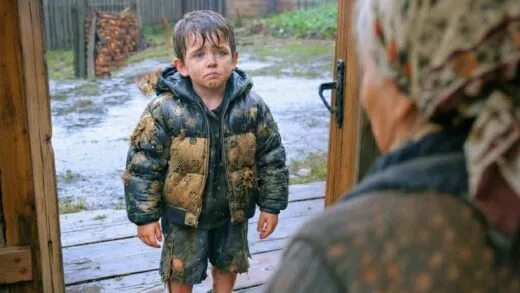

Victor sat across from her, put the folder on the desk, and explained plainly. He wanted to adopt a child from the children’s home, Artyom Sokolov, born in 2001. Cherepnova nodded, took the folder, and began flipping through it.
She reached the criminal record report. Stopped. Read it again. Finished it.
Closed the folder. Looked up at Victor, not harshly, not rudely, just calmly. The way you close a question that, in your view, shouldn’t have been opened.
“Mr. Savelly,” she said evenly, “state law directly prohibits adoption by persons with a criminal conviction for an intentional crime against life or bodily safety. Your conviction was for homicide. There are no grounds to consider your application.”
Victor looked at her. No anger. No confusion. “Manslaughter,” he said.
“The statute is clear,” she answered, and slid the folder back toward him. He took it, stood, thanked her out of habit, not because there was anything to thank her for. He walked outside, stopped at the steps, and lit a cigarette.
First one in three years. He stood there looking at the gray street, the cars, the pigeons by the trash can. Inside his chest it was quiet, not empty, just quiet.
Like before starting a difficult weld. When you already know it’ll be hard, but your hands are already in the right position. He finished the cigarette, crushed it under his shoe, and walked to the bus stop.
That evening at home he took out the folder, opened it to the page with the conviction, and read it for a long time. Then he closed it, set it on the table, and began thinking methodically, without anger, about what exactly the law said and where exactly there might be a gap in it. He found the gap that same night.
He read slowly, under the desk lamp, underlining every word that seemed important. Family law, Section 127. “Persons who have or have had a conviction for an intentional crime against the life or health of a citizen may not adopt.”
The word intentional was there plainly, with no wiggle room. He set down the pencil and reread his conviction. It said something else: homicide without aggravating circumstances.
In legal practice that meant a death caused without intent to kill, in a situation that had spun out of control. Not intentional. Cherepnova had either not read the law carefully or had read it in the way most convenient to her.
Victor closed the folder, turned off the lamp, and went to bed. He slept hard. First time in weeks.
Monday morning he took an unpaid day off and went to a legal aid office. An older attorney worked there, Andrei Semyonovich Barsukov. Small, balding, jacket with shiny elbows, but with the sharp eyes of a man used to reading between the lines.
Victor laid out the situation briefly: conviction, statute, denial by child services. Barsukov took both documents, read them slowly, and looked up. “They’re wrong,” he said simply.
“Your conviction does not fall under the list of intentional crimes covered by that provision. This is a procedural error. It can be challenged in county court.”
“Chances?” Victor asked. Barsukov shook his head. “Not no. Just depends how it goes.”
“The law is on your side. But child services will file a response. The court will look at housing, income, references.”
“Everything has to be spotless. Everything.” Victor nodded and asked the fee.
Barsukov named the amount. Victor barely reacted. They made arrangements. For the next three months he worked on two fronts.
He welded metal at the repair company and gathered documents with the discipline of a man who no longer had the right to make mistakes. In June he ended his arrangement with Nina Stepanovna, not because he wanted to, but because renting a bed wouldn’t do for adoption. He found a one-bedroom apartment, small but separate, with a window facing the yard and working heat.
He signed an official one-year lease with an option to renew. The owner, a quiet retired engineer, asked why the paperwork had to be done so formally. Victor explained.
The man nodded and signed without extra questions. In July Victor got a fuller reference from work, not two lines this time but a full page. The foreman wrote it himself, no template.
Victor N. Savelly works conscientiously, has no disciplinary violations, is respected by his coworkers, and approaches assigned tasks responsibly. He read it aloud and asked, “Will that do?” Victor said it would.
In August Barsukov filed an appeal in county court. The filing was neat and short, just two pages, no wasted words, with citations to the exact statutes. Cherepnova was notified.
While the paperwork moved through the system, Victor kept visiting Artyom. No one forbade that. He was just a familiar adult now, a regular visitor the caregivers no longer saw as an outsider.
Artyom was nearing six by then. He had changed over the summer. Not outwardly, but somewhere inside.
He talked a little more, asked more questions. About the factory, about the river, about why Victor’s calluses were so hard. Victor answered, and sometimes brought him something interesting.
A piece of copper pipe, an old gear from a reducer, a horseshoe magnet. Artyom examined them with the seriousness of a little engineer. One time Victor brought him a children’s book, Folk Tales from Around the World, bought from a kiosk for a few dollars…