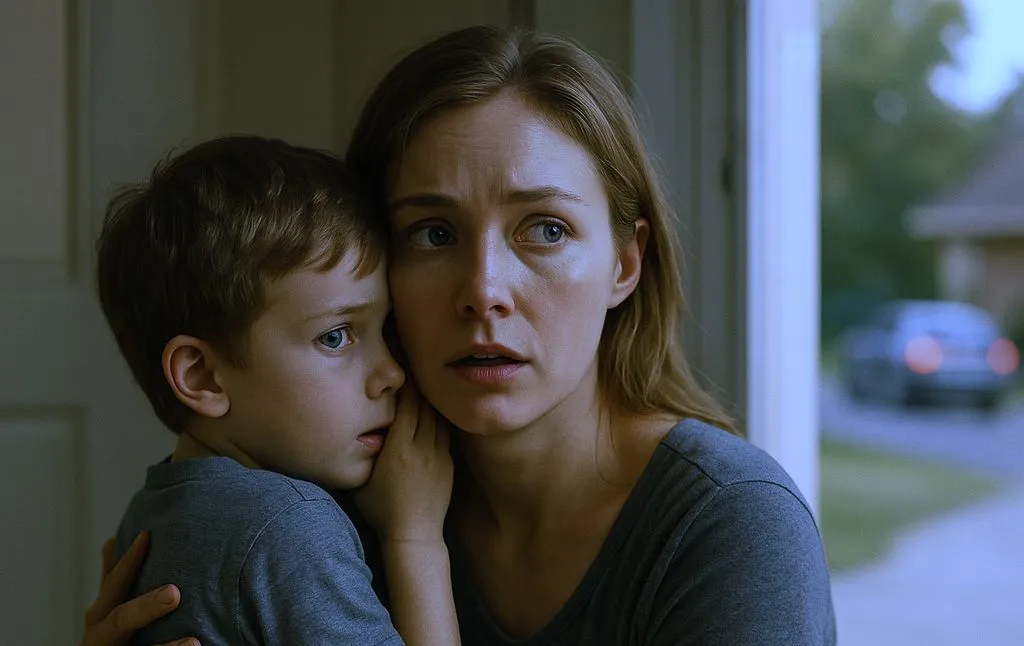
The moment my eight-year-old son walked through the front door, he wrapped his arms around me and whispered a confession that made my blood run cold. He told me that they had eaten at a restaurant while he waited in the car for two hours. I didn’t press him for details right then, nor did I ask him to repeat himself. I simply grabbed my car keys, drove straight to my parents’ house, and walked through the front door without a moment’s hesitation.
They had left my eight-year-old child alone in a parked vehicle while they enjoyed a leisurely lunch for over two hours. That was the very first sentence out of his mouth when he returned home to safety. He didn’t cry, scream, or act out in the way a terrified child might be expected to.
He didn’t even seem angry or confused, which somehow made it worse. He just walked in, hugged me as if it were a normal Tuesday, and quietly delivered those devastating words. They went to a restaurant. I waited in the car. For two hours.
I stood frozen in the middle of our kitchen, my brain struggling to process the reality of what I had just heard. My hands were trembling uncontrollably, and I couldn’t distinguish whether I was feeling pure rage or absolute disbelief. Despite the storm brewing inside me, I didn’t ask any follow-up questions.
Not yet, at least. I didn’t want to force him to relive or explain an event that should never have occurred in the first place. I told him to stay inside where he was safe, grabbed my keys again, and walked out the door.
Ten minutes later, I was standing in the entryway of the home I had purchased for my parents. They were lounging in the living room as if it were just another lazy, uneventful afternoon. My mother was calmly folding a basket of laundry, smoothing out towels with practiced ease.
My dad held a glass of iced tea, staring blankly at a television program that neither of them seemed to be actually watching. Neither of them looked up with concern or even asked why I had appeared so suddenly. I looked at them and spoke with deadly clarity.
— You have exactly 24 hours to pack up your belongings. You are leaving this house.
My mother froze mid-fold, the towel hanging limp in her hands. My dad looked at me as if I had suddenly started speaking a foreign language he couldn’t comprehend. I repeated the statement, ensuring there was no room for misinterpretation.
My dad let out a short, dismissive laugh, treating my words as if they were part of some elaborate joke. He acted as if I hadn’t just accused them of leaving their own grandson locked in a vehicle like an abandoned accessory. For the first time in years, however, my mother looked genuinely nervous.
I asked them directly if the boy’s statement was true. They didn’t even try to deny it. My mother simply claimed that he hadn’t wanted to come inside.
She explained that he was being fussy and throwing a bit of a tantrum before they arrived at the restaurant. They figured it would be better for everyone if they just let him sit in the car to cool off. My dad chimed in, adding that it was “only” two hours and claiming they had checked on him halfway through the meal.
They had gone to dine at a nice Italian restaurant with my sister and her two children. Apparently, they had done so without a second thought regarding the fact that they had left their grandson sitting in the back of a hot car with the windows barely cracked and no air conditioning. They had made a formal reservation.
The table was set for five people. My parents. My sister. Her daughter. Her son.
There was no seat reserved for my child. They hadn’t forgotten him in a moment of chaos; they had actively excluded him. It was done on purpose.
When I demanded to know why, my mother said he had just been “too much” lately. She claimed her other grandchildren were easier to handle. They were more polite. More predictable.
She insisted that those children knew how to behave in a restaurant, unlike my son. That was the moment I stopped listening to their justifications. I had known for a long time that my parents favored my sister above all else.
Everyone in our extended family was aware of this dynamic. Years ago, they had sold their old family home and used the proceeds to buy her an apartment and help her launch a boutique that went bankrupt in less than a year. When I had confronted them about the disparity back then, they simply said they trusted me to be fine on my own.
They argued that she needed more help than I did. I didn’t argue with them at the time. instead, I continued to support them whenever they needed it.
I paid their utility bills without ever being asked to do so. I bailed them out financially when their car broke down. I even bought the very house they were currently sitting in.
I had transferred the property to their name without asking for a single thing in return. But this situation wasn’t about favoritism anymore. This was about cruelty.
You do not leave a vulnerable child alone like that. You don’t isolate an eight-year-old while you sit inside laughing over plates of pasta and drinks with your “favorite” grandchildren. You don’t discard a human being that young just because they aren’t as convenient as you would like them to be.
I told them one more time.
— 24 hours. Get out.
My mother tried to defend their actions again. She insisted I was overreacting. She claimed he was safe.
She kept repeating that he was fine, as if the outcome justified the risk. My dad remarked that maybe next time I should teach my kid how to behave if I wanted him to be included in family outings. That was the precise moment I realized I didn’t recognize either of them anymore.
I turned on my heel and left. I drove home in silence. When I walked in, my son was on the couch watching a cartoon.
He didn’t say anything when I entered, and I didn’t bring up the incident. Not yet. But I knew one thing for certain.
They were never going to be near him again. I thought that stern warning would be the end of it, but I was wrong. That was just the first crack in a dam that had been holding back years of resentment I hadn’t seen clearly until now.
The next morning, I received a phone call from my sister. It wasn’t my parents calling, but her. She didn’t even start by asking how my son was doing.
She got straight to the point, accusing me of overreacting and manufacturing drama where none existed. I didn’t bother asking how she found out so quickly because I already knew the answer. My mom had called her the night before, crying and twisting the narrative just like she always did.
Apparently, in their version of events, I had burst into their home screaming like a lunatic, thrown papers at them, and stormed out threatening to leave them homeless over a “small misunderstanding.” What they conveniently omitted was the part where they left a child locked in a car. I told her she wasn’t part of this conversation and hung up.
Then, I made it official. That afternoon, I had a lawyer draft a formal termination of occupancy notice, effective immediately. Technically, I still owned the house.
I had transferred it to them under a private agreement, but the legal title remained firmly in my name. I had allowed them to live there rent-free. Property taxes, maintenance, insurance—all of it came out of my pocket.
I printed the legal document and drove back over to the property. I didn’t even go inside this time. I simply left the letter in the mailbox, took a picture for proof, and texted my dad to check his mail.
Within an hour, my phone blew up with a string of furious messages from both of them. My mom sent screenshots of old receipts from when they had helped me after college, as if she were trying to cash in a favor from two decades ago. My dad tried to use guilt, claiming I was tearing the family apart over a “misunderstood dinner.”