— Answer me, where did you put the money from your card?! Mother said you withdrew it all! — her husband roared.
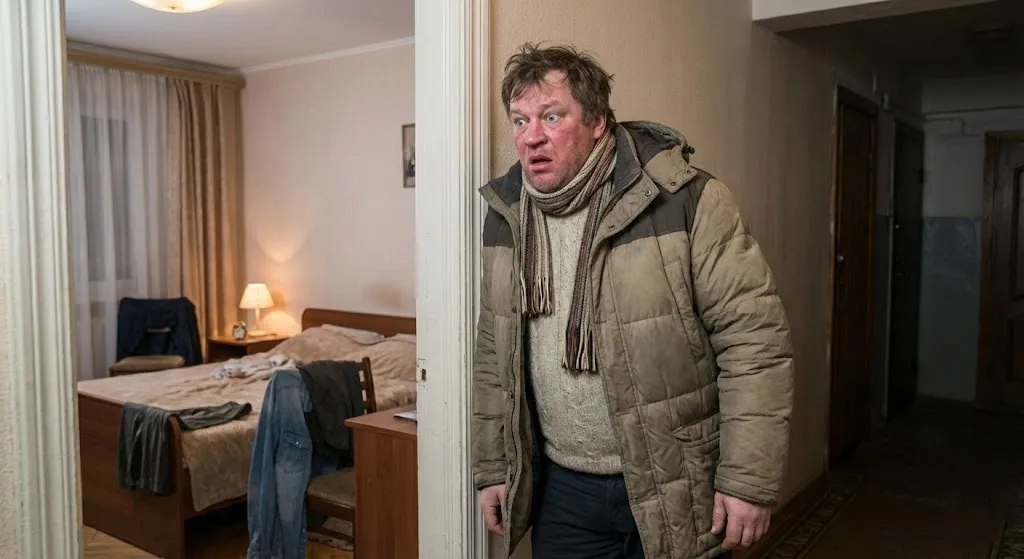
The silence of the night was shattered by the crash of a breaking door. An enraged husband burst into the apartment screaming, “Where’s the money from your card? Mother said you withdrew it all!” Behind him loomed the figure of his mother-in-law, who had clearly added fuel to the family fire. The woman silently rose from the bed and flicked the light switch. What the uninvited guests saw at three in the morning made the man sink to the floor and his mother let out a piercing shriek.
Olga closed another Excel spreadsheet and stretched, easing her stiff back. Outside the accounting office of the “Granit” construction company, the February evening was already growing dark, though it was only half-past three. Colleagues in her department were packing their bags, chatting about traffic jams and grocery prices. Olga glanced at her phone — a notification from the bank.
Paycheck. 70,000, exactly as usual. She opened the app and, with a familiar motion, mentally allocated the sum: 20 for utilities and the mortgage, 10 for groceries, 5,000 for public transport passes and gas, 3 for communications, and the rest into savings or for unforeseen expenses. Before marriage, Olga used to easily save half her salary. Now, the “unforeseen” category almost always contained the same item — requests from her mother-in-law.
For the last six months, Lyudmila Fyodorovna seemed to have rediscovered that her daughter-in-law had an income. At first, she asked for small amounts: three thousand for medicine, five for groceries. Olga gave it without question, even with some relief. An elderly woman, a small pension, her son should help, and therefore, his wife should too. It was normal, it was human.
But then the amounts started to creep up. In December, Lyudmila Fyodorovna asked for 30,000 for a new refrigerator. The old one was completely dead, even the repairman said it wasn’t fixable. In January — 20,000 for a fur coat. “I bought it on an installment plan, but I can’t scrape together the first payment, and at my age, you can’t be cold.” Olga gave the money, though a dull irritation was already building inside her. Not even about the money itself, but about how it happened. Lyudmila Fyodorovna would call Kirill. He would pass the request to Olga, who would get out her card. A well-oiled, flawless chain.
Olga left the office and headed to her car — a used Kia Rio, but her own, reliable. On the way home, she stopped at “Pyaterochka,” picking up groceries for the week: chicken, vegetables, grains, milk. At the checkout, the receipt came to four and a half thousand. A year ago, the same basket cost three. Olga winced, packed the bags in the trunk, and drove on.
At home, in their two-room apartment on the fourth floor of a panel building, it was quiet. Kirill was still at work. He worked as a site foreman at the same construction project that Olga’s company managed. He earned a little more, about eighty thousand, but his salary mostly went to his car and his hobbies (fishing, tools). They didn’t really manage a joint budget. Each pulled their own weight. Olga had even suggested a couple of times to merge their income and expenses into one spreadsheet, to plan together, but Kirill brushed it off:
— Why make it so complicated? We’re living just fine.
Fine? Olga unpacked the bags, put the chicken in the fridge, and put the kettle on. She sat at the table with a cup of tea and opened the banking app again. She looked at the numbers and thought. If they gave her mother-in-law twenty or thirty thousand every month, what would they save for? Kirill dreamed of a new car. Olga wanted to go to the seaside in the summer, and it would also be nice to save up for repairs. The wallpaper in the living room was already peeling at the corners, the linoleum in the kitchen was worn through. But every time the savings pot started to fill up, Lyudmila Fyodorovna would appear with her needs.
The door slammed. Kirill was back. Tall, broad-shouldered, with short-cropped light brown hair and a weathered face. He threw off his jacket, walked into the kitchen, and kissed the top of Olga’s head.
— Hi! What’s for dinner?
— We could bake chicken with potatoes, — Olga stood up and opened the refrigerator. — How was your day?
— Fine. The team met the plan, the foreman is happy. — Kirill plopped onto a chair, grabbing his phone. — Listen, Mom called. She said she’s stopping by tomorrow with a pie.
Olga tensed up but didn’t show it. She got out a baking sheet and started cutting potatoes.
— A pie is nice. But why is she stopping by?
Kirill shrugged, not looking up from his screen:
— Well, she misses us, I guess. We haven’t seen her in a while.
They had seen her the day before yesterday. Lyudmila Fyodorovna had come to pick up that very twenty thousand for the fur coat. But Olga said nothing. She turned on the oven, put the baking sheet inside. They ate dinner in silence. Kirill talked about work, about the foreman promising a bonus by March. Olga listened with half an ear, nodding. The thought kept spinning in her head: mother-in-law with a pie tomorrow. That means another request is coming. They always came with something tasty: a cake, a pie, pastries. It was a ritual, a prelude to the conversation about money.
After dinner, Kirill went into the other room and lay down on the sofa in front of the TV. Olga washed the dishes and wiped the table. She looked at the clock: half-past eight. She remembered she had made an appointment with the gynecologist yesterday for a routine check-up. She hadn’t been in a while, at least three months. She should go, make sure everything was okay. Lately, her lower abdomen had been aching, and her cycle was off. Olga set a reminder on her phone: tomorrow at noon, the clinic on Tsentralnaya Street.
The evening stretched on in its usual routine: shower, a TV series, getting ready for bed. Kirill fell asleep instantly, as always. Olga tossed and turned for a long time, listening to his steady breathing. She thought about how her mother-in-law would come tomorrow and it would start all over again. And she would have to give money again. And keep quiet again, because Kirill would take his mother’s side anyway. Not out of malice, it was just easier. “She’s alone, we have to help.”
The next morning started as usual. Olga got up at seven, got ready, drank her coffee. Kirill was still asleep, his shift started later. She left for work, immersing herself in reports and invoices. At half-past twelve, she remembered the doctor, told her boss she’d be leaving a bit early, and drove to the clinic.
The gynecologist, a woman in her fifties with a tired face and kind eyes, saw her quickly. Examination, questions, tests. Then the doctor leaned back in her chair and smiled:
— Well, Olga Sergeyevna, congratulations. You’re pregnant. It’s early, about three weeks, no more.
Olga froze, blood rushing to her ears.
— You mean… for sure?
— Hold on. The blood test will confirm it definitively, but based on the exam and the test — yes. Here’s a referral for tests. A list of vitamins. Come back in two weeks for an ultrasound. We’ll see how the embryo has implanted.
Olga left the office in a daze. She got into her car, placed her hands on the steering wheel, and just sat there. Pregnant. A baby. She and Kirill hadn’t planned it specifically, but they hadn’t been careful for the last few months either. They both seemed to want children, they just hadn’t discussed when. And now it had happened.
The first wave of emotion was joy. Warm, swelling in her chest. A baby. Their baby. Kirill would be happy. Definitely. He had been saying for a long time that he wanted a son. Or a daughter. Anyway, he wanted one. But then came the second wave. Anxiety, cold and sticky. A baby meant money. A lot of money. A stroller, a crib, clothes, diapers, doctors, tests. Olga quickly did the math in her head: they’d need at least 150,000 minimum for all the essentials. And that was just for the beginning. Where would they get it if 20-30 thousand was flowing to her mother-in-law every month?
She started the car and drove home. The whole way she thought: should I tell Kirill right away or wait? On one hand, he was her husband, the baby’s father, he had a right to know. On the other — as soon as she told him, he would tell his mother. And Lyudmila Fyodorovna… Olga grimaced. Her mother-in-law would be happy, of course, but she’d immediately start interfering. Giving advice, controlling things. And she’d also find out how much money was set aside for the baby. And that’s when new requests would start: “Lend me some, we’ll pay you back later. When the grandchild is born, I’ll give it all back.” Olga could already see the scene playing out vividly.
When she entered the apartment, Lyudmila Fyodorovna was already sitting in the kitchen. Kirill was there, sipping tea. An apple pie—golden-brown and fragrant—sat on the table.
— Olenka… — Her mother-in-law stood up, smiling broadly. — I’m so glad to see you! Come in, have a seat. The pie is hot, just out of the oven.
Lyudmila Fyodorovna was a sturdy, short woman with a short haircut styled in neat waves. Her face was round, her cheeks rosy, her blue eyes shrewd. She was always dressed to the nines: today, a dark blue dress with a small floral print, a beige cardigan, and a string of beads around her neck. She looked younger than her sixty-two years. Olga greeted her and sat down. Kirill cut her a slice of pie.
— How was work? — Lyudmila Fyodorovna asked, settling across from her. — Did you get paid recently?
Olga grew wary. The question sounded casual, as if in passing, but these kinds of questions were usually the prelude.
— The day before yesterday, — she answered cautiously.
— Well, that’s good, that’s good, — her mother-in-law nodded, sipping her tea. — And how much are they paying now? Seventy, right?
— Yes, seventy.
— Not bad, not bad. Our pension… It’s a joke. Eighteen thousand. What can you live on? — Lyudmila Fyodorovna sighed, looking at her son. — Kirillushka, you should drop by sometimes, I’m all alone, like a hermit. We just got a new refrigerator. Big and beautiful. But there’s nothing to fill it with.
Olga almost choked on her tea. The refrigerator? The same one she had given thirty thousand for in December? So they really did buy it.
— Mom, you know I’m busy, — Kirill shrugged guiltily. — But we help where we can.
— I know, I know, my son. You’re good kids. — Lyudmila Fyodorovna shifted her gaze to Olga and smiled. — Olenka, don’t be offended that I’m asking directly. It’s just that a friend of mine told me: you can get a tax deduction if you have a bank statement for the year. They say you can get some money back. Do you happen to know how that’s done?
Olga tensed up…