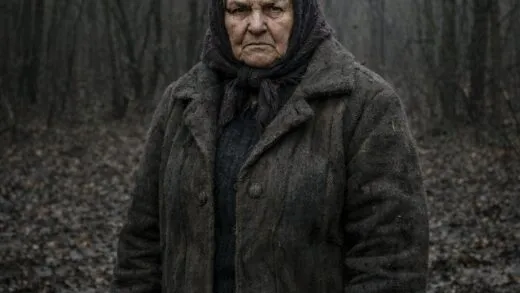
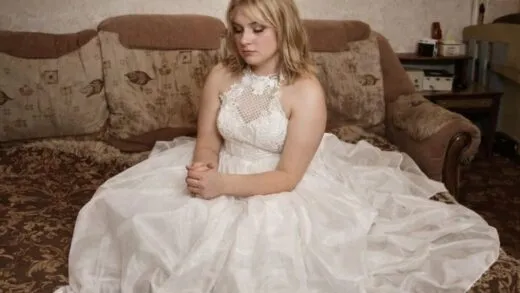
The guards knew. The prison doctor, Captain Nadezhda Fyodorovna Kovaleva, 38, knew best of all. Because afterward they came to her.
With dead eyes. Kovaleva treated them. Wrote in the log: “Minor household injury, fall on stairs, self-inflicted trauma.”
When there were consequences, she handled them quietly in the infirmary under a desk lamp. Filed it as a medical procedure. Kovaleva wasn’t a sadist.
She was a coward. In some ways that’s worse. A sadist is at least honest about cruelty.
A coward hides behind circumstances. Senior guard Tamara Ignatyevna Zueva, 45, knew too. Zueva had served in the prison system for twenty years.
Started in a men’s colony outside Karaganda, then transferred to the women’s side. Easier, as she liked to say. Hard woman, but not vicious. Zueva didn’t take part in Thursdays.
She just looked away, left the administrative building at 9 p.m. sharp, handed the keys to the duty officer, and walked back to the settlement. She lived in a two-room apartment with a cat and a television. What happened after 9, she said, was not her concern.
That was how the machine worked. Every cog knew its place and turned the right direction.
No one asked questions. No one filed complaints. Because a complaint from prison passed through the warden’s hands.
And the warden was Zhuravlev. The circle closed. Zulfiya didn’t learn about Thursdays right away.
Her first year she worked in the sewing shop and lived in a barracks mostly filled with older inmates and repeat offenders. Those women weren’t touched. Once she moved to the kitchen, the prison opened up to her.
The first person to tell her was Raikhan Amarova, a Kazakh woman from Aktau, one of the women she lived with. Serving time for fraud—counterfeit ration coupons. Quiet, almost invisible, with large frightened eyes.
Raikhan herself wasn’t taken on Thursdays: too plain, too timid. But she saw others led away and heard them when they came back. One evening, while Zulfiya was sorting grain in the kitchen, Raikhan came in for hot water.
She stood there a moment, quiet. Then said softly, without looking up, “Zulfiya, did you hear? The new girl, Lena, they took her last night.”
“Brought her back this morning. She’s in the infirmary now. They say she fell down the stairs.”
“But people don’t get hurt like that from stairs, Zulfiya-apa. They just don’t.” Zulfiya said nothing, but she started watching.
She saw that every Thursday after lights-out, the light came on in Zhuravlev’s office. The office window faced the service yard, and the kitchen stood on the other side. Zulfiya saw that light every Thursday while she scrubbed kettles after supper.
She saw women being led to the administrative building. Sometimes one, sometimes two. She saw them come back two or three hours later.
Walking slowly, hunched over, arms tight to their sides. She saw it. And kept quiet.
Because everybody kept quiet. Because there was nothing to be done. Because she was a prisoner and they were men with rank.
And between those two worlds was a gap with no bridge. That’s what she thought. Until November 1978.
Natasha Belyaeva arrived at Stepnaya on November 3, 1978. She was twenty-two. From Tselinograd.
Convicted under Article 89. Theft of state property. She had worked as a grocery clerk.
Caught in a shortage. About $300 worth in today’s rough terms. Three years in a general-regime colony.
But somehow she was sent here, to a strict-regime one. “Clerical error in transport assignment,” the paperwork said. Funny thing was, those kinds of errors happened in Stepnaya with suspicious frequency.
Especially if the inmate was young. Especially if she was pretty. And Natasha was pretty.
Tall, blonde, with big gray eyes and a young face not yet hardened by life. She was afraid of everything. Afraid of the barracks, afraid of the inmates, afraid of the guards.
She cried for the first three days straight. Kozlova took her into her work brigade. Put her in the sewing shop.
“Keep your head down. Sew. Don’t stand out.” Natasha nodded.
Two weeks later, on a Thursday, they came for her. A duty guard. Natasha never even learned his name.
He opened the barracks door at 10:20 p.m. “Belyaeva. Out. Headquarters.”
Natasha looked at Kozlova. Kozlova turned away. Toward the wall.
Without a word. Natasha came back at four in the morning. Lay down on her bunk.
Didn’t cry. Just lay there with her eyes open, staring at the ceiling. When the woman above her touched her shoulder, she flinched like she’d been shocked.
In the morning Zulfiya saw her in the mess hall. Natasha sat in front of a bowl of porridge and didn’t eat. Just sat there.
Hands in her lap, eyes empty. Zulfiya walked over and set down a mug of hot tea. Real tea.
Not the prison brew, but tea from her own stash. Natasha looked up at her. Looked at Zulfiya.
And in those gray eyes Zulfiya saw something she had once seen in the mirror herself. Long ago. After the first time Ermek raised a hand to her. That evening Zulfiya stayed late in the kitchen.
Scrubbed kettles, scraped tables, cleaned the stove. Her hands worked while her mind turned things over. Zulfiya thought slowly, thoroughly, the way she did everything.
She didn’t make decisions in a rush. She simmered them, the way you simmer soup. Slow heat. Stirring now and then.
Natasha was called out two more times, every Thursday. Zulfiya watched the girl fade a little more each time. Like a candle going out…