Then he agreed. For a bottle of vodka. He told him about the thallium, the fifty rubles, the “I thought it was for rats.”
When Somov asked whether his conscience bothered him, Kuzmin looked away. “Why should it? I sold rat poison.
What she did with it was her business. I didn’t know.” Then after a pause he added, “Though those were some real rats, no question.” The investigator Dzhumabayev rose to lieutenant colonel.
Retired in 1998. Lives in Karaganda. When Somov met with him a second time, after Zulfiya’s death, Dzhumabayev was quiet for a long while.
Then he said: “I investigated a lot of cases. Murders, robberies, rapes. But this one was the only case that kept me awake.
Not because it was frightening. Because I didn’t know whose side I was on. I was an investigator.
I was supposed to accuse her. But inside? Inside I knew she was right.
And that’s the worst thing that can happen to an investigator. When the killer is right.” Zulfiya Akhmetova’s case remains sealed.
Archive of the Karaganda prosecutor’s office. Retention period: 75 years. It won’t be declassified before 2054.
Somov’s article came out in 1993. No names, no specifics. Hardly anyone noticed.
It was 1993. People had too much else on their minds.
Who had time to care about some woman who poisoned three prison officers out on the steppe fifteen years earlier? But people remember. The women who served time in Stepnaya remember.
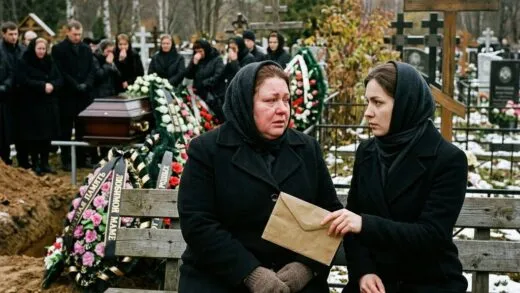
Three carnations on the grave. One for each man. Pilaf made from Zulfiya’s recipe on the memorial table.
And the words Natasha Belyaeva repeated whenever those years came up: “Aunt Zulfiya saved me. And not just me.” This is not really a story about justice.
Justice is a word that lost its meaning in Stepnaya. This is a story about a line. The line beyond which a person stops enduring.
Everybody’s line is different. For Zulfiya it was the look in Natasha Belyaeva’s eyes after she came back from headquarters. For someone else it might be a letter saying your daughter is dead.
For someone else, a third winter in a barracks where the temperature never gets above the mid-40s. We don’t know where our own line is. We hope we never find out.
Because to find out means you’ve reached it. Zulfiya Kadyrovna Akhmetova reached hers. And crossed it.
Can she be condemned? The court condemned her. Fifteen years.
Can she be absolved? No one absolved her. She never asked to be.
Can she be understood? That each person decides for himself. One thing we know for certain.
After February 23, 1979, Thursdays in IK-14 Stepnaya stopped. For good. As long as someone remembers, the women who lived through Stepnaya will not be forgotten.