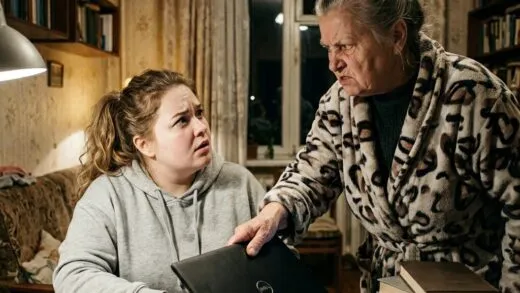

I tried to dismiss it, telling myself that nurses were overworked, that hospitals were breeding grounds for gossip, that my anxiety was drawing patterns in the clouds. But the issue with patterns is simple: once you identify the first one, you cannot blind yourself to the rest. Somewhere between the rhythmic beeping of the machines and the steady breathing of the man I thought I knew, doubt finally took root.
I did not confront Caleb. I asked no questions. I shed no tears. Instead, I did exactly what I had been trained to do for my entire adult career: I went hunting for evidence. That morning, after ensuring Megan was settled in the room, I announced I needed to stop by my office.
I walked past the elevators, descended into the concrete silence of the parking garage, and locked myself inside my sedan. Only then did I allow my lungs to fully expand. I dialed an old college friend who now worked in high-level cyber security; I had trusted him with sensitive investigations in the past. When I laid out the situation, he paused on the line longer than usual.
“Some things, once you see them, you cannot unsee,” he warned me.
I told him I was prepared. Less than two hours later, a secure link arrived on my phone. I plugged in my headphones and stared at the small screen, my hand holding the device with a steadiness that surprised me. The footage was grainy black and white, captured from the ceiling angle of the hospital room. I watched myself on the screen—tired, diminished—adjusting the blanket around Caleb before exiting. The door clicked shut.
The room went still for a moment. For a heartbeat, I hoped the nurse was mistaken. Then, Caleb’s eyes opened.
They didn’t flutter open groggily; they snapped open, alert and predatory. He lifted his head, scanned the perimeter, and pushed himself up onto his elbows with startling ease. The movement was fluid, confident. My breath hitched in my throat. He swung his casted legs, rotating them slightly, then reached under his pillow for his phone. There was no hesitation. No pain. No struggle.
Minutes later, the door opened again. Megan walked in, lugging a large paper bag. She smiled broadly as she latched the door behind her.
“Is she gone?” she asked.
Caleb laughed. It was a sound I hadn’t heard in weeks. They began to eat—fried food, heavy and greasy.
He drank a beer, joking about how sick he was of soup and how exhausting it was to pretend to be weak. Megan sat intimately close to him, her hand resting on his leg through the cast, reminding him to keep up the act of helplessness. Then came the dialogue that turned my blood into ice.
They were discussing my house. The brownstone my parents had left to me—the deed that was solely in my name. Caleb stated that once it was sold, his debts would be evaporated—gambling debts, loans from dangerous individuals. He said I was easy to manipulate because I was the type of woman who always sacrificed herself first.
He added, quite casually, that he would file for divorce the moment the funds were secured. When the video clip ended, I removed my headphones and sat in absolute silence. I did not scream.
I did not collapse against the steering wheel. I simply processed the fact that the man in the hospital bed was not injured; he was a performer, and I was the captive audience he assumed would never leave the theater. I had always imagined betrayal would be a loud event.
I imagined screaming matches, shaking hands, a violent outpouring of grief. But sitting alone in that garage, what I felt was quieter and infinitely worse: Humiliation.
It wasn’t just the lie, or even Megan’s involvement. It was that I had been reduced to a stock character in their script—the predictable wife. The reliable martyr. The woman who would always choose endurance over suspicion. I replayed the footage in my mind—Caleb laughing, Megan coaching him—talking about my parents’ home as if it were already a liquidated asset.
They didn’t fear me. They assumed I would break. That realization burned hotter than any insult.
And then, something inside my chest shifted gears. The part of me that habitually softened blows, that searched for excuses and silver linings, went dormant. In its place rose the woman who audited financial disasters for a living and never blinked at the wreckage.
I wiped my face—not because of tears, but to clear my vision. I was done being the person they expected. I deleted nothing. I saved everything.
I changed my digital passwords. I secured my legal documents. I moved quietly, meticulously, like someone navigating a pitch-black room. From that moment on, I stopped reacting as a wife.
I began thinking like an investigator. If they believed I was pliable, I would reinforce that belief. If they needed me to be compliant, I would appear calm, agreeable, and slow to make decisions.
The truth was simple: They thought they were running a con. They had no idea the woman they were lying to made her living by exposing frauds.
The hardest task was walking back into that hospital room and pretending the world hadn’t ended. I entered with the same weary expression, the same careful, soft movements. I asked Caleb how he was feeling.
I fluffed his pillow. I listened to his litany of complaints without interrupting. And when Megan looked at me with feigned concern, telling me I really ought to take better care of myself, I thanked her.
Caleb noticed the shift in the dynamic immediately. When a person believes they are losing control, they tighten their grip; but when they believe they are winning, they relax. I told him I had finally spoken to a real estate agent.
I said that selling the brownstone might be the only viable way to keep us afloat if his recovery dragged on for months. I spoke the words slowly, as if they pained me physically. The effect was instantaneous.
Caleb softened, becoming visibly more affectionate. He held my hand longer, speaking about gratitude and his fear of being a burden. Megan watched us closely, her relief poorly concealed behind a mask of support. Pressure from his side of the family followed quickly—phone calls about sacrifice, about doing what was necessary, about how liquid assets meant nothing compared to a life. I nodded. I listened. I did not argue.
Behind the curtain, I met with a divorce attorney. I gathered bank records. I traced the patterns of debt, the gambling transfers to offshore sites, the payments to unofficial lenders—everything Caleb had tried to bury was now neatly organized on paper. Megan grew careless. She stayed out late, she whispered too loudly in the hallway, she stopped hiding her irritation when I delayed signing papers.
When people believe the ending is written in stone, they stop watching their step. Caleb began slipping, too. Some days he forgot to moan when he moved; some days he sat up with too much core strength; some days he looked far healthier than a man in his condition should. I cataloged every error.
Still, I said nothing. Because timing is everything. The longer they believed the house was already theirs, the more completely they revealed their true nature.
I wasn’t waiting for revenge. I was waiting for the singular moment when the truth would bring the entire structure crashing down. And I knew that moment was imminent.
The night everything fell apart arrived quietly. Visiting hours were nearing their end, and the hallway outside Caleb’s room was tranquil, filled with the soft rhythm of distant rubber wheels and hushed voices. His mother was sitting beside the bed, whispering prayers.
Megan stood near the window, checking her phone with frantic frequency. Caleb looked visibly nervous. He kept asking when the paperwork for the house would be ready, asking if the agent had called back yet.
He asked the same question twice, then a third time. I answered gently each time, assuring him everything was moving forward, that he just needed a shred more patience. Then, the door opened.
Three men walked in without a knock or hesitation. They did not look like family. Their posture was stiff, their eyes sharp and assessing; the atmosphere in the room changed instantly. One of them looked directly at Caleb and spoke his name.
Caleb’s face drained of all color. He began moaning loudly, clutching the sheets, playing his role to perfection. His mother stood up in alarm, demanding to know who they were. The lead man smiled—a cold, humorless expression—and said they were there about the money. The room went dead silent.
They listed the amount Caleb owed, the accumulated interest, the expired deadline. They stated they were finished with waiting and asked when payment would be rendered. Caleb turned to me, desperation cracking his voice. He told them I was selling the house. He told them the money was incoming. He begged them to be patient.
That was when I stepped forward.
“There will be money,” I said calmly, “but it won’t be coming from my house.”
Every face in the room swiveled toward me. I retrieved my phone and connected it to the large monitor on the wall. Without raising my voice, without a tremor in my hand, I pressed play.
The footage filled the room. Caleb sitting up. Laughing. Eating. Drinking. Megan nestled beside him.
Their voices filled the silence, explaining every detail of a plan they thought would never be heard. His mother screamed. Megan slumped against the wall, her hands shaking uncontrollably. Caleb opened his mouth to speak, but no sound emerged.
The men watched the screen without interrupting. When the video ended, the leader shook his head and let out a soft, dark laugh. He remarked that he had never seen someone fake a tragedy so thoroughly. They left with a final, pointed warning for Caleb. When the door clicked shut behind them, the room felt hollowed out.
Caleb reached for me, begging, explaining, pleading. I looked at him for a long, stretched moment and realized I felt absolutely nothing. The performance was over.
Everyone had finally seen the script. When the room eventually emptied of the debt collectors, the silence was heavier than the confrontation. Caleb was no longer pretending.
His voice cracked as he begged me not to leave, not to abandon him now that his reality was exposed. He promised explanations, he promised change, he promised anything he thought might slow my departure. I did not argue. I did not raise my voice.