
She was eight when she lost both parents and was sent to live with her withdrawn grandfather up in the southern Appalachians. Small, scared, and unfamiliar with the rhythm of the woods, she found a dying wolf pup caught in a rusted leg trap. Everybody in the holler said leave it — it’s a wild animal — but she warmed it with her own hands and saved it.
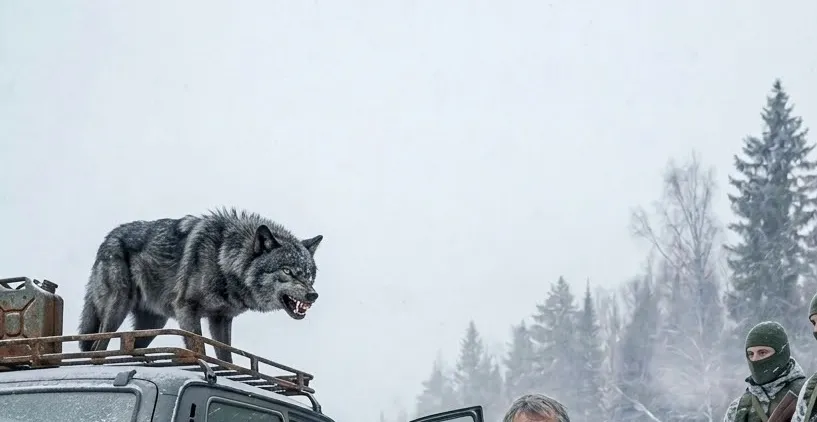
That small kindness changed everything. Months later, when criminals came through and a fire started—when it felt like help would never arrive—the wolf returned. And it didn’t come alone.
Winter had come early to Pine Hollow that year, as if the mountains wanted to be tucked in before anyone noticed. The little cluster of houses looked like an island in a sea of firs and ridgelines. The sky sat low and leaden, promising not just snow but a real storm.
The air smelled like pine and approaching frost — that sharp, clean scent anyone who’s lived in the mountains knows. Mike stood at the window of his weathered cabin, one hand braced on the sill. The glass was cold, but his palm felt hot from the chill in his bones.
Mike was a tall, weathered man who’d spent most of his seventy years in these hills. He read weather in his knees more accurately than a forecast. Arthritis had been getting worse lately; it woke up with changes in the wind, creaking his joints like an old door.
He wore a thick knit sweater and patched work pants tucked into wool socks. His beard was mostly gray and wind-roughened. There was a tired intelligence in his face, a calm that had seen a lot.
Headlights cut through the white wash on the road. Mike’s chest tightened. He knew who the truck carried, but even now he had trouble believing it.
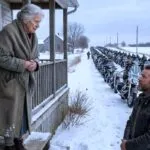
The pickup eased up to the gate and a county deputy unloaded a small suitcase, tipped his hat, and left before the light faded. Mike went out on the porch, his hip protesting, and the wind slapped a handful of icy snow in his face.
“Morning, Em,” he said hoarsely. He hadn’t had a real conversation with anyone in days.
Emma didn’t answer. She clutched an old wooden doll to her chest — her mother’s handiwork — paint scuffed but precious. Her blue eyes were wide and empty in a way that wasn’t just from the cold.
The deputy had left them alone. Mike set a steaming pot of soup on the table. He’d made it the way his wife used to: rich tomato base, a spoonful of sour cream, and a pinch of fresh dill. He hoped the smell would be familiar enough to reach her.
“Sit, honey. Eat something,” he said, sliding a bowl toward her. “You’ll need it out here.”
Emma sat but kept her coat on. She placed the doll on the table and stared at it instead of the food.
“I’m not hungry,” she said, the first words she’d spoken since she arrived.
Mike sighed and sat across from her. Pain shot through his knees and wrists, but it was the helplessness that hurt most — the feeling that he might not be enough for the child who looked so much like his late son. He remembered teaching his boy to split wood and to check the fish lines. Now he had to be both grandfather and, in a way, parent.
“Listen, Em…” he started, and she flinched.
“Don’t,” she whispered. “Mom said things get cold. They’re gone now.”
Her words landed like a stone. Mike took the bowl away without arguing; there wasn’t an answer that would fit.