

My husband brought his mother, who had stage four cancer, left her with me, and went on a business trip for a whole year. I took care of her alone, spending sleepless nights, changing diapers, measuring out morphine by the clock. Before she died, my mother-in-law squeezed my hand painfully and whispered, “Daughter, go to the village. There, in the summer kitchen, under the potato box, dig.”
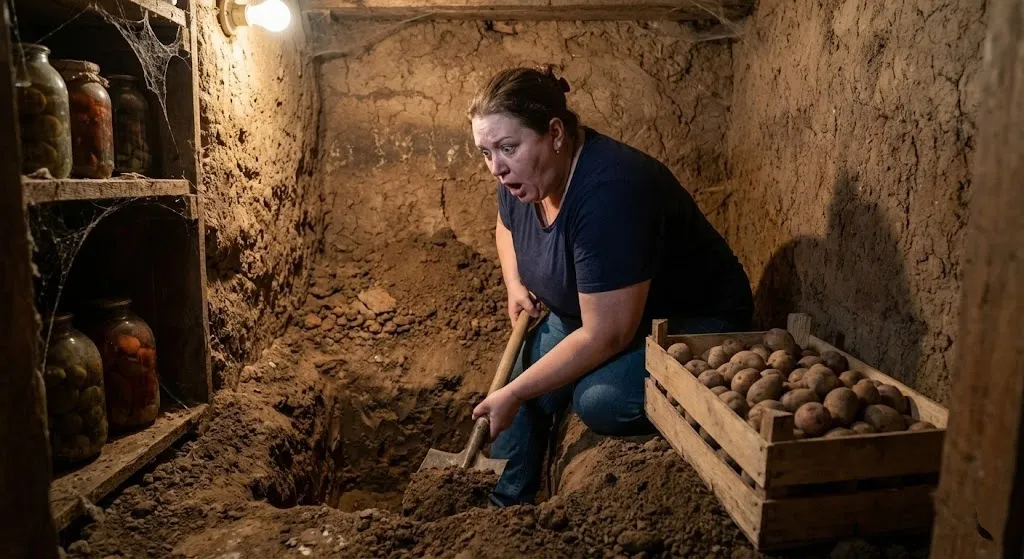
A week after the funeral, I went. The shovel hit iron at a depth of half a meter. I cleared the earth with my hands, and goosebumps ran down my spine when I saw what she had been hiding there for thirty years.
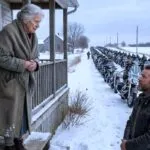
In a January blizzard of 1986, Anastasia Prokhorovna was returning from the district hospital in Podgorodnoye, where she had gone for a pension certificate, when she heard a faint squeak by the service entrance. At first, she thought it was a kitten, but the sound was different—somehow heart-wrenching and so human that she stopped dead in her tracks.
She cleared the snowdrift with her mittens and froze. In a cardboard box that once held canned goods lay a baby, wrapped in a flannel blanket, blue from the cold, with an unhealed umbilical cord that hadn’t even fallen off yet.
“Savely, look!” she whispered to her husband as she burst into their cottage in the village of Volosskoye, clutching the bundle to her chest as if she was afraid someone would take it away. “Look what I found!”
Savely Titov, a man of few words and strong build, with hands accustomed to the axe and plow, put aside his kindling and stared at his wife with the expression of a man who had just witnessed a miracle in the middle of an ordinary winter evening.
“He’s alive… Breathing… Barely, but breathing. Three days old, at most. Lord, have mercy!”
Savely crossed himself, although he hadn’t been to church since his Komsomol youth.
“Who would do such a thing?”
“I don’t know. And what difference does it make now?”
They warmed the baby by the stove all night, fed him diluted goat’s milk from a dropper, and took turns holding him, afraid to fall asleep. By morning, the boy had turned pink and was crying at full strength, demanding and angry, clearly annoyed at being made to wait so long.
The Titovs, who had spent ten years unsuccessfully seeking treatment for infertility from every doctor in the region and even from an old herbalist in a neighboring village, exchanged a look and understood each other without a word. The official adoption process through the district department and the court took three months because the Soviet bureaucracy demanded certificates, work references, and housing inspection reports. They named the boy Valery, in honor of Chkalov, whose portrait hung in the village council office right above the chairman’s desk. And Anastasia secretly hoped that the hero pilot’s name would pass on some of its strength and nobility to the child.
“Not a word to anyone!” she told her husband as they brought their son home in a shared ride, wrapped in three blankets. “He’s ours, our own flesh and blood, and that’s how it will always be.”
“What about the documents?” Savely asked, lowering his voice, although no one could hear them in the back of the truck.
“I’ll hide them. Just in case!”
Savely nodded and never brought up the subject again. And Anastasia put the adoption papers, the court decision, and the new birth certificate into a tin candy box and buried it in the cellar of the summer kitchen. Under the potato box.
Valera grew up, and with each passing year, Anastasia’s motherly heart clenched tighter with an anxiety she couldn’t even explain to herself. The boy was handsome, smart, and picked everything up instantly, but there was something unsettling about him. A certain cunning in his eyes, an ability to lie so smoothly that even adults believed him, and a complete lack of remorse when the lie was exposed. At twelve, he stole money from a neighbor’s box and blamed it all on her grandson, looking his mother in the eye with such sincere offense that she almost believed him. At fifteen, he tricked her out of her pension for a school trip that never existed. At twenty, he stopped visiting the village unless he needed something, and when he did come, he didn’t even bring a loaf of bread.
“It’s in his blood,” Anastasia would sigh, looking out the window at the empty road where her son hadn’t appeared for three months. “It seems blood will out, and no amount of love can change that.”
Savely died in 2003, peacefully in his sleep, before seeing the worst of his son’s nature, leaving his wife with a secret she now had no one to share.
Five years ago, when a state project to build a bypass road around Dnipro reached their district, people from the administration came to see Anastasia Prokhorovna in a black official car. Her plot of land, almost a hectare of fertile soil by the highway inherited from her parents, was valued at three million hryvnias. She signed the documents with fingers stiff with excitement, unable to believe the zeros on the paper were real.
That same evening, her son called.
“Mom, I heard they’re buying up land out there?” His voice immediately turned honeyed, as it only did when he needed something. “What did they give you?”






Comments are closed.