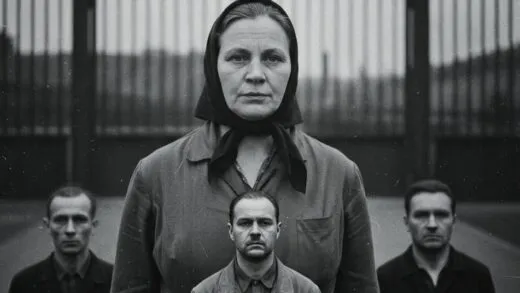
His helpers melted back into the crowd the moment they realized the job had failed. “Well, look at that,” Sever said quietly, stepping out from behind the men protecting him. “You came for me?”
Cross understood then that he was finished. He lunged anyway, trying to reach Sever with the shiv. He didn’t make it a step.
The human wall closed. He went down. And the crowd passed its own sentence.
Prison justice. Fast and ugly. By the time guards and tactical officers forced their way through, it was over.
Cross lay in a pool of blood. Official version: killed in a mass fight, trampled in the chaos. And Sever stood off to the side, calmly turning his beads.
He hadn’t dirtied his own hands. Others had done it for him. He had only pulled the right strings.
But that was just the first act. The real target was Anikeev. Right after the riot was put down, Sever sent a note outside through his lawyer.
It contained only two names: Anikeev and Cross. And an address where a middleman could be found—the one who had carried the money from the colonel. For Archimedes’ people, that was enough.
They got hold of the middleman. Faced with consequences much worse than anything the police could offer, he talked. He named the man who had ordered the hit.
He also gave them proof of the money transfer. That information landed on the desk of the commission from the capital, and Anikeev’s chances disappeared. He was arrested in his own office.
The charges: conspiracy to commit murder, abuse of office, criminal ties. The decorated colonel, hero of the anti-crime campaign, ended up behind bars in the same system he had manipulated for years.
But he wasn’t sent to a regular prison. Old connections got him into a so-called “red zone,” where former law-enforcement officers served time. His life there was relatively safe.
But Sever had no intention of killing him. He had something else in mind. One day a new cellmate was assigned to Anikeev.
A quiet, forgettable man. Convicted of a white-collar offense. He brought with him a small cassette player and one tape. That night, as Anikeev tried to sleep, a familiar melody began to play softly.
Then came that rough, soulful voice singing about prison life. Anikeev sat up on his bunk. “Turn it off,” he said hoarsely.
The cellmate, without a word, turned it up. And Anikeev understood. He understood that Sever’s web had reached him here too.
And that for the rest of his life, he would be followed by the voice of the man he had killed. Years passed.
The dust around the high-profile murder of Mikhail Krug settled. Newspapers stopped writing about the scandal in the city police department. The names Wolf, Moose, and Artist faded from the crime pages and became just another underworld story told to younger men.
Life moved on. In the lifers’ cell at Black Eagle, things also stayed much the same. Sasha Sever and his neighbor, the former Wolf, continued their strange and grim coexistence.
Neighbor had become deeply religious. He barely ate, prayed constantly, and muttered under his breath, asking forgiveness from the man he had helped kill. For him, hell had become routine, and guilt his only real form of life.
Colonel Anikeev served his sentence in the red zone. He broke too. The constant background soundtrack of Krug songs, arranged by people loyal to Sever, drove him into a nervous collapse.
He tried more than once to take his own life, and each time he was stopped. His days became a private soundtrack to his own downfall. It seemed revenge had been completed.
Everybody responsible had paid. Each in his own way. Sever could have rested. But one final obligation remained…