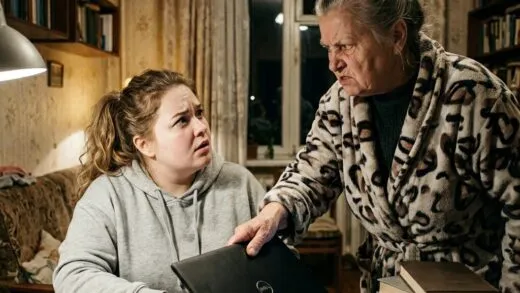
In a dead, even tone, the visitor said he wanted the truth—every detail of the previous night. Astakhov tried to invoke his father’s position, but the stranger simply shook his head. No connections, he made clear, would help him now.
The visitor added that the minister was away at an important state meeting, which meant that in his absence, all sorts of unfortunate things could happen. Then he opened the briefcase. Inside was not a gun but a set of surgical instruments laid neatly on red velvet: scalpels, clamps, and several syringes filled with a clear liquid.
The stranger said one syringe contained a special truth serum that would turn a man inside out and make him spill every secret he had. At that, Astakhov broke down. Whatever swagger he had left disappeared all at once. Faced with quiet, methodical terror, he folded and agreed to tell everything voluntarily.
Begging not to be injected, he talked for hours, sobbing and pouring out every detail of the attack. He gave up his friends, their addresses, their habits, and along the way revealed their shady financial schemes and older crimes that had never been solved. He betrayed his companions with the same ugly eagerness he had shown the night before in humiliating a defenseless woman.
The visitor listened in silence, recording the confession on a concealed miniature tape recorder. When the young man finally ran out of words, the stranger took up one of the syringes and announced that the punishment would now begin—with total loss of control. He explained, coolly, that the drug would slowly destroy the mind and trap the victim in his worst fears.
When Astakhov begged for mercy, the operative replied that this was a personal order from a grieving father, and that tears had a price. In that moment, the young man understood whose daughter they had attacked in the dark park. The terror that crossed his face, the legend says, was worse than fear of death. There was no one left to call and nowhere left to run.
After the injection, he went limp. His eyes turned glassy, and he began swatting at things no one else could see. A few days later, according to the tale, his body was found in the locked apartment, and the death was written off as a drug overdose. That was how the first act of the carefully staged revenge supposedly ended.
The second target was Pavel Gromov, the general’s son—the boxer who trusted his fists and despised weakness. The Artist decided the punishment should be a mirror image of his defining sin. A man who relied on brute force would die by another kind of force, after first experiencing complete and humiliating helplessness.
Late one evening, in the dark entrance of his apartment building as he returned from training, Gromov was allegedly met by a professional snatch team. They worked with precision. They did not strike his face. Instead, with expert knowledge of anatomy, they methodically broke both his arms. The limbs he had prized so highly became useless under the sickening crack of bone in the echoing stairwell.
Whimpering in agony, he was dragged into an elevator and taken to the roof of a high-rise. There, the story says, The Artist was waiting. He explained in hard, plain terms the difference between a street fight and the overwhelming power of the state. Then he told the boxer he had made the fatal mistake of laying hands on the untouchable daughter of a powerful ruler…