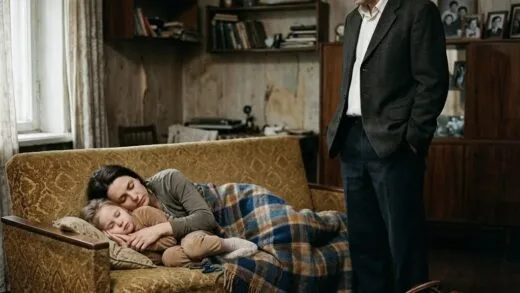

— the girl asked, hugging her. — I want to run like everyone else.
Anna held her close, burying her face in the child’s hair.
— Soon, sunshine. Very soon.
On Monday morning, she wrote her resignation letter from “Midlife.” Kovalev didn’t even try to stop her, just nodded and signed it. Irina, upon learning this, smiled maliciously.
— Good riddance. Incompetent people have no place here.
Anna said nothing. She gathered her things from the utility room: a spare pair of slippers, a mug, a photo of Katya that hung on the wall. None of her colleagues came to see her off. Only Marina caught up with her in the hallway and hugged her.
— You hang in there, — she whispered. — And don’t worry. Everything will work out for you.
Anna nodded, unable to speak. Dmitry was waiting for her again at the exit. He helped her carry the box of her things to the car.
— Ready to start a new life?
— I guess so, — Anna smiled uncertainly. — Though it’s scary. I’ve never done anything like this before.
— But you’ve done something much harder, — Dmitry started the car. — Raising someone else’s child. Fighting for his life. Working where you weren’t appreciated. Compared to that, this new job will seem easy.
The first few weeks at the charity clinic were a blur. Anna learned on the go: answering calls, scheduling patients, dealing with paperwork. Olga patiently explained, showed, and supported her.
Patients came in a steady stream. Elderly people with sore joints who couldn’t afford proper medication. Mothers with children who were sent from one clinic to another. Homeless people with frostbite and ulcers. Every story broke her heart. Anna talked to them, comforted them, helped them fill out forms. She organized the queue, made sure no one waited too long. She found doctors for consultations, arranged for free lab tests.
Dmitry came by several times a week. He brought medicine, supplies, and sometimes just sat in the corner and watched. Anna noticed how he looked at her when she interacted with patients. There was something like approval, satisfaction in his gaze.
One evening, after a particularly hard day when they had to turn away an elderly woman for an expensive examination—there simply weren’t enough funds—Anna went out onto the porch for some air. Dmitry was smoking nearby.
— Is it tough? — he asked.
— Very, — Anna admitted. — I know we’re helping. But I still feel helpless. So many people need help. And we can do so little.
— We can do more than you think, — Dmitry put out his cigarette. — Every person saved is already a lot. Remember the woman with the baby who was here on your first day? Olga told me. The baby survived. Thanks to us. Is that so little?
Anna thought about it. He was right. They were truly saving lives. One at a time. One story at a time.
— Dmitry, — she looked at him. — Why do you do this? Funding the clinic, helping people? You’re spending money, time. What do you get out of it?
He smiled.
— Meaning, I guess. I make money. A lot of money. But what’s the use of it if it just sits there? This way, it’s working. Helping people. That’s its real value.
They stood in silence, looking out at the dark street. A dog barked somewhere in the distance, a car drove by.
— Thank you, — Anna said quietly, — for believing in me. For giving me a chance.
— You have nothing to thank me for, — Dmitry shook his head. — You’re the one doing all the work. I’m just creating the conditions.
A month passed. Anna had completely settled into the clinic, feeling needed and useful. Every day brought new stories: scary, touching, sometimes funny. She learned not to internalize the patients’ grief, but to remain empathetic and attentive.
Katya sometimes came with her. The girl would sit in the corner, drawing, observing. One day she said:
— Auntie Anya, when I have my operation, I’m going to be a doctor too. I’ll help people, like you.
And in those moments, Anna knew: she was in the right place. Despite the lack of a salary, despite all the difficulties. Here she was valued not for how fast she mopped floors, but for her humanity. For her ability to listen and understand.
One Wednesday, as Anna was sorting through patient files, an elderly man with a gray beard and kind, wrinkled eyes walked into the clinic. He looked around as if searching for someone, then approached the reception desk.
— Good day, — Anna looked up. — Are you here for an appointment?
— No, I’m a doctor myself, — the man smiled. — Sergey Nikolaevich Kravtsov. I’ve heard about your clinic and wanted to offer my help. I’m a pediatrician, retired for five years, but my hands still remember.
— Please, come in. I’ll get Olga, she’s the coordinator.
While Sergey Nikolaevich was talking to Olga about his schedule, Anna brought tea. The old man nodded gratefully and took a sip.
— Petrova, you said your last name was? — he suddenly asked, squinting. — And what’s your first name and patronymic?
— Anna Mikhailovna.
— Mikhailovna, — Sergey Nikolaevich shook his head thoughtfully. — And what was your mother’s name?
— Elena.
— Elena Petrovna Petrova. Lena Petrova, who worked as a nurse at orphanage number seven?
Anna nodded, not understanding where he was going with this.
— Yes. She worked there for over twenty years. She died eight years ago, of a heart condition.
— My God… — Sergey Nikolaevich ran a hand over his face. — So you’re her daughter? Anechka… Lena showed me a photograph. You were just a little girl then.
— You knew my mother?
— I did. And I respected her very much. — The old man leaned back in his chair. — I worked as a doctor at the same orphanage. Your mother was special. Not just a nurse, but a true angel for those children.
Olga stood up.
— I’ll go check the schedule for next week, and you two can talk.
She left, leaving them alone. Anna sat down opposite Sergey Nikolaevich.
— What do you mean?