There are things you don’t ask about in prison. Aigul was eight years old. She died in September, and Zulfiya learned in October because the mail took a month.
The girl had been sick for a week. Fever, sore throat, a membrane in the throat. Her mother-in-law didn’t call a doctor for three days.
When she finally took her in, it was too late. Toxic diphtheria, airway swelling. The child suffocated in a district hospital in Kyzylorda, in the arms of a nurse she didn’t know.
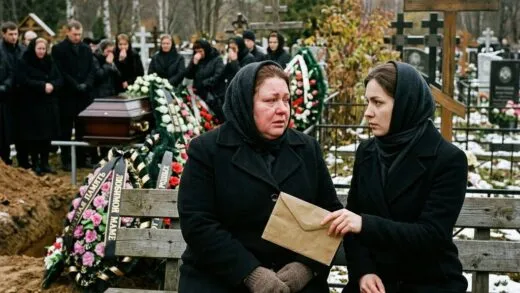
Zulfiya filed a request to attend the funeral. The prison warden denied it. Verbally, no explanation.
Just not allowed. She filed a second request with the prosecutor’s office. The answer came two months later.
“No grounds for transport. Request denied.” She didn’t even know exactly where the grave was.
Her mother had written: city cemetery. But not the plot number. Maybe she didn’t know.
Maybe she forgot. Maybe she didn’t want her daughter picturing it in detail. After the letter, Zulfiya didn’t change outwardly.
She still got up at five, still cooked, still handed out food in silence. But Kozlova later said something had gone out of her eyes. Not anger.
The light. As if someone had switched off the lamp in a room and left only darkness. Calm, level, endless darkness.
And a month after the letter, Zulfiya first saw what happened on Thursdays. Every prison has things everybody knows and nobody talks about. In Stepnaya, that thing was Thursdays.
On Thursday nights after lights-out, women were called out of the barracks. Not all of them. Young ones. Pretty ones. First-timers who didn’t yet understand the rules.
Women who had no influential inmate to shield them. Usually a guard came. Knocked on the barracks door, called a name.
“You. Out. To headquarters.
Operations office.” The woman got dressed and went. She had no choice.
Refusal meant a disciplinary violation. A disciplinary violation meant solitary. Solitary was a concrete cell about six by four feet, no windows, a wooden plank for a bed, and a bucket in the corner.
In winter it dropped below freezing. Ten days in there changed a person. If she came out at all.
The woman went to headquarters. They were waiting there. The warden, Lieutenant Colonel Viktor Stepanovich Zhuravlev.
Fifty-two, heavyset, red-faced, with small pale eyes. Former investigator from another city. Transferred into the prison system in 1974.
Why, nobody knew for sure, but there were rumors. Improper interrogation methods. Not with criminals.
With witnesses. He was moved quietly, no trial, no case. Just transferred.
From one office to another. To a place where methods could be used without much restraint. Because prisoners weren’t considered people.
They were “the contingent.” That was the term in the paperwork. The contingent.
Zhuravlev ran the colony like a man who owned it. In a way, he did. Out there, 25 miles from Karaganda, his authority was absolute.
Inspections from headquarters came twice a year, and everyone had a week’s warning. Before the commission arrived, the barracks were painted, the inmates were fed decently, and answers were rehearsed. The commission left satisfied.
Zhuravlev shook hands, smiled, and slipped a package of lamb into the trunk. Zulfiya cooked that lamb. Zhuravlev had two regular companions.
Captain Renat Ildusovich Galimov, head of operations, 44. Tatar, lean, hollow-cheeked, thin bloodless lips. He spoke softly, almost in a whisper.
That made him worse. Because behind the quiet voice was force he used without warning. Galimov handled informants, discipline, reports.
He knew everything about every inmate. Who was close to whom, who hid what, who got packages, who cried at night.
He used that information. Not for the institution. For himself. When a woman was brought to headquarters, Galimov usually sat in the corner, silent.
Watching. Sometimes writing in a notebook. The inmates feared him more than Zhuravlev.
Because Zhuravlev was predictable in his brutality. Galimov wasn’t. The third was Senior Lieutenant Pyotr Savchenko.
Head of security. Twenty-nine. Ukrainian, from Poltava.
Tall, fair-haired, good-looking. The women called him “Pretty Boy.”
Savchenko didn’t beat anyone. He worked differently. Called in young first-timers.
Spoke gently. Offered tea, cookies from the officers’ supply. Promised early release, transfer to lighter duty, an extra family visit.
The girls believed him. Especially the ones who were new and still didn’t understand that an officer’s promise in prison was just air. Thursdays happened every week.
For years. Everyone knew. The administration in Karaganda knew too..