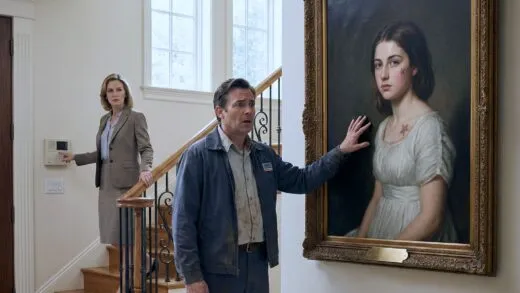

Mr. Hayes stepped forward, pulling several sheets of paper from his briefcase. Patricia recoiled, holding up her hands. “No, wait, hold on…” “This is a formal notice to vacate the premises,” he said calmly, handing over the documents with the same detached air a waiter presents the check. “You have thirty days.” Michael’s face turned gray, as if all the blood had drained out of it. Karen’s mouth opened and closed. “You’re kicking us out? From our own home?”
“You look surprised,” Eleanor tilted her head slightly. “I don’t see why. This house never belonged to Patricia or Michael. It’s my house, which I acquired back in the nineties. There’s a big difference between ‘my house’ and ‘the house I live in.’ You seem to have forgotten that, Patricia.” Patricia snatched the papers and shook them. “This is my home! I’ve lived here my whole life!” “This is the home you lived in,” Eleanor corrected her. “Lived. Past tense.”
Karen whirled on Susan, her face twisted with rage. “This is all your fault! You tattled! You ran to her crying like a little kid!” “This is because,” Eleanor interrupted, without raising her voice, “you sold a child’s cello and used the money to build a pool in a house you don’t own. With stolen money.” “We improved the property!” Michael threw his hands up. “It’s an investment! The value of the house went up…” “With stolen money. In a house that doesn’t belong to you. And now you will be returning that money to the buyer. All one hundred thousand dollars of it.”
The yard began to empty. Guests quietly gathered their things, folded their towels, and called their children from the pool in hushed tones, trying not to draw attention. No one said goodbye to the hosts, no one thanked them for the invitation. They just vanished, like shadows at dawn. Susan took a step forward and said quietly, but clearly enough for everyone remaining to hear, “Lily is not a ‘second-class’ family member. She never was.” Eleanor walked over to her great-granddaughter, who stood frozen, clinging to her mother’s hand. She spoke in a completely different voice—soft, warm, meant only for her. “Lily, honey, you didn’t lose anything. You are not to blame for any of this. They are. Only them.”
The cello was returned a few days later. The buyer, upon learning of the criminal investigation and the notarized deed of gift, chose to return the instrument and demand his money back from the sellers rather than get entangled in a legal battle. The hard case looked like it had been through a lot in those few weeks, but inside, everything was perfect: the antique wood, polished by time; the bow in its compartment; the rosin in its velvet pouch. Eleanor opened the case with Lily in the music room, where the humidifier still hummed and the old sheet music lined the shelves. The girl ran her fingers over the body, the strings, the curve of the neck—the way you touch something alive that has returned from a long journey.
She said nothing, just hugged her great-grandmother so tightly that Eleanor closed her eyes for a moment, letting herself feel the embrace, the gratitude, the relief. Now that the danger had passed, she could finally breathe. The thirty days went by faster than the family expected. Patricia tried to bargain, Michael tried to appeal to pity, and Karen threw tantrums over the phone and in text messages, but Eleanor didn’t answer their calls or read their messages. Meanwhile, the criminal investigation proceeded, and words like “restitution,” “payment plan,” and “potential jail time” became a permanent part of the former residents’ vocabulary, like a chronic illness.