Kofi, a veteran ranger in Serengeti National Park, was patrolling near the village of Mbili when he spotted what looked like a carcass in the brush. But as he drew closer, the heap of fur shifted. He realized he was looking at a living lion, and the sight was enough to stop any seasoned woodsman in his tracks.
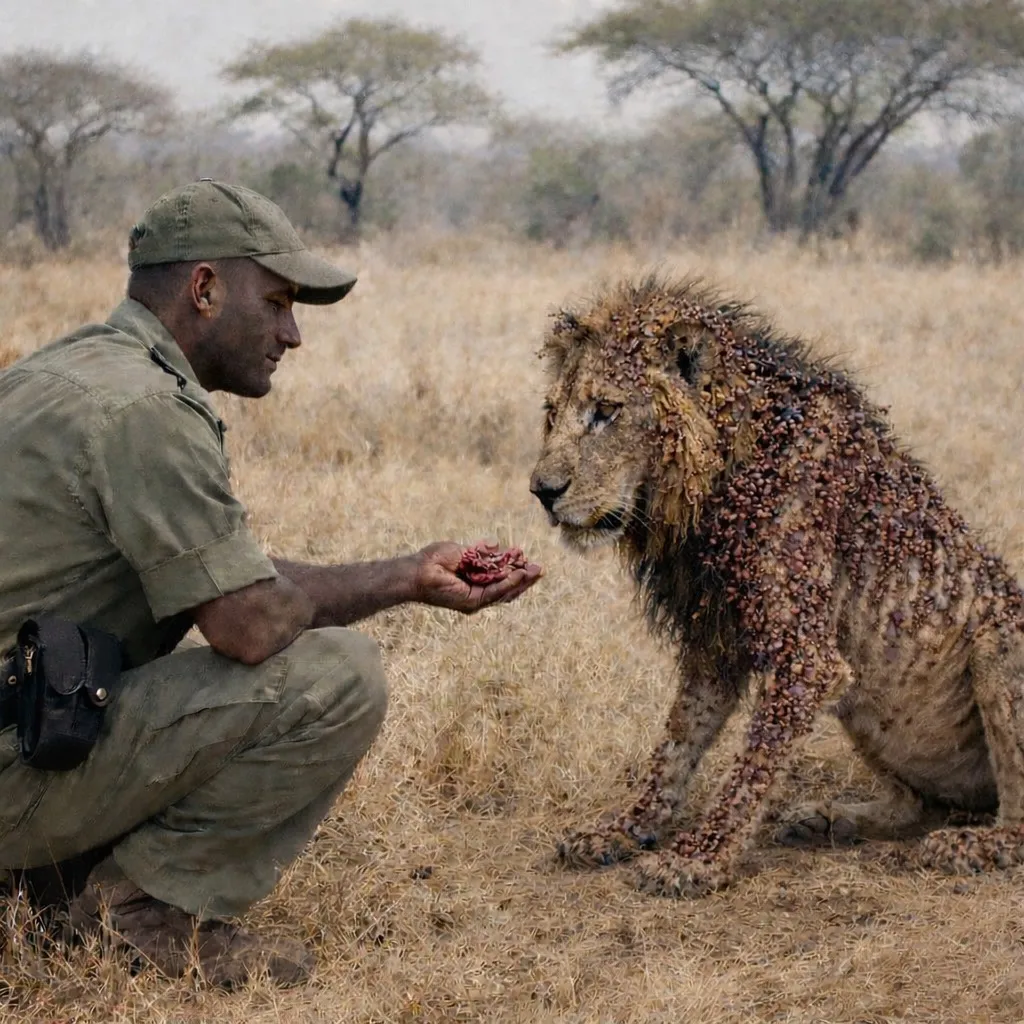
The big cat was fading fast, suffering through a brutal infestation of parasites. In his fifteen years on the job, Kofi had seen the worst of the bush: the harsh reality of the food chain and the devastating aftermath of poaching. He had tracked wounded elephants and found calves lost to predators or traps.
But he had never seen a predator of this stature brought so low. The once-mighty animal was a skeleton draped in skin, his legs trembling as he tried to stand. His famous mane was matted with dirt and burrs, a shadow of its former glory.
There was no aggression in the lion’s eyes—only a profound, quiet exhaustion. He didn’t snarl or charge; he simply struggled to keep his head up, his breathing shallow and labored. He was a king who had run out of options.
Kofi knew the safety protocols, but his gut told him this was a rare exception. He had a supply of beef in his truck used for baiting traps. He decided to step in.
Moving with practiced calm, the ranger tossed a large cut of meat a few yards away from the animal. He kept a respectful distance, knowing that even a dying lion is a dangerous one. He watched as the cat’s survival instinct flickered back to life.
The lion dragged himself toward the food. He ate with a desperate hunger, though every movement seemed to drain his remaining energy. While the cat was occupied, Kofi moved slightly closer to assess the damage, and what he saw was grim.